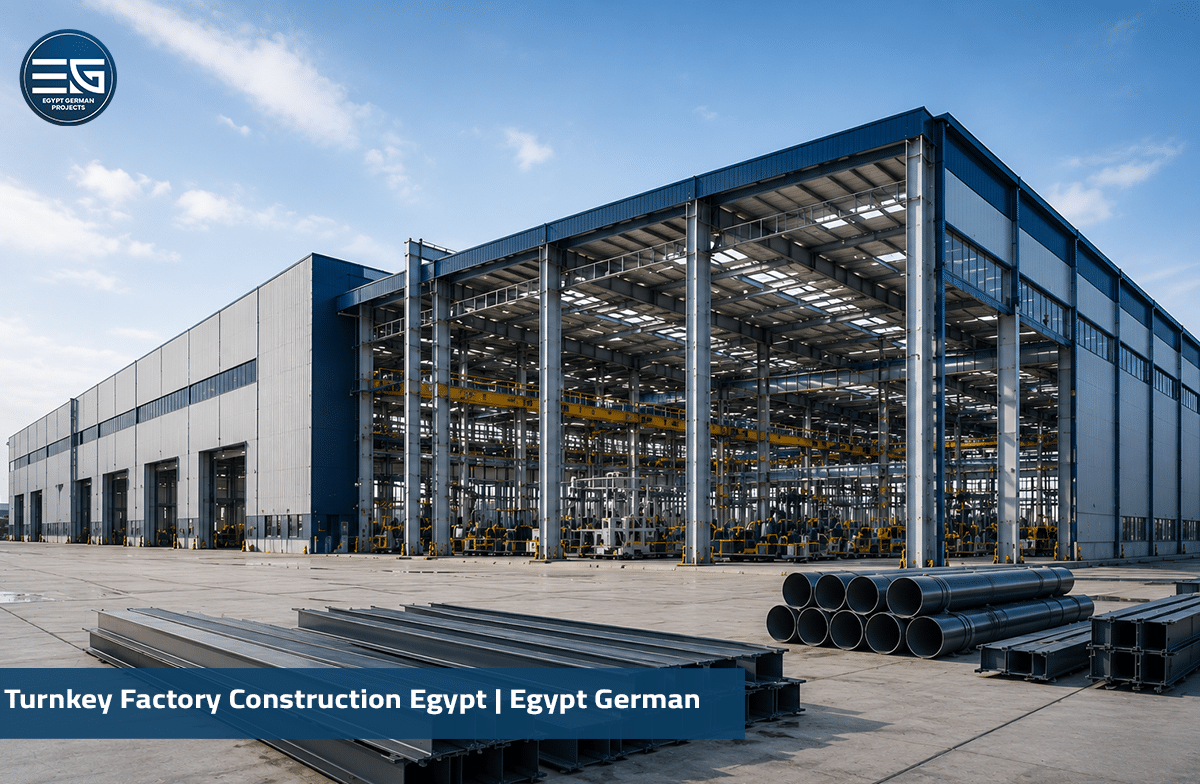
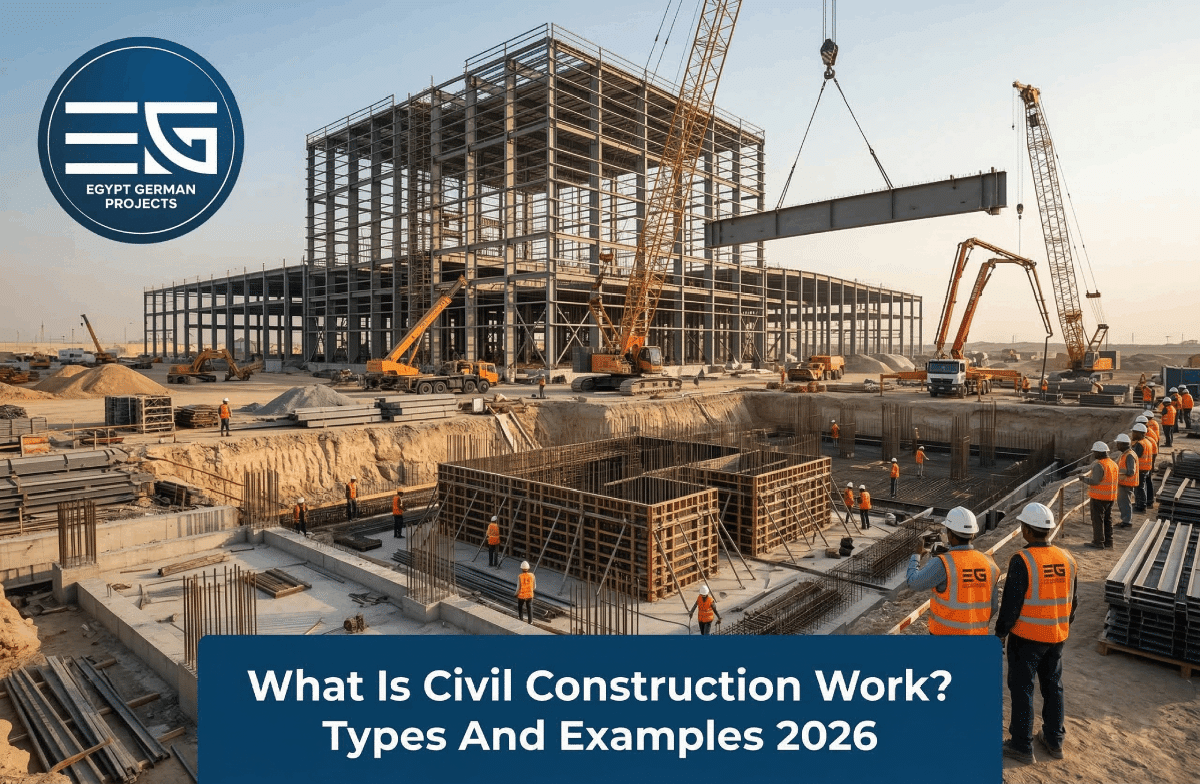
Are you building a factory, warehouse, or infrastructure project in Egypt or the MENA region? If so, you will see “civil works” listed on your budget before any construction begins. This guide explains exactly what that line item means. We cover the technical details, costs, and real site conditions your project will face.
What does civil construction work mean?
Civil construction builds the physical base of your project. It includes everything that must happen before architectural finishes can start.
Think of civil construction as the skeleton and underground nervous system of your facility. Here is how a project comes together:
- Civil Works: Creates the core structure and underground systems.
- MEP Engineers: Wire and pipe that core structure.
- Architectural Finishers: Give the building its final look.
You cannot add plumbing, electrical lines, or finishes until the civil work is complete and approved. While civil works are hidden once the walls go up, they determine if your building stands for 50 years or fails in five.
What is the meaning of “civil works” vs “civil construction”?
In practice, “civil works” and “civil construction” mean the same thing. They both describe the structural tasks that form the physical base of a building. However, they are used in slightly different settings:
- Civil Works: This term is common in government contracts and purchasing documents. It usually refers to publicly funded earthworks or structures.
- Civil Construction: This is the operational term used by contractors on-site. It describes actual build stages like excavation, pouring foundations, and waterproofing.
In Egypt’s industrial sector, companies use these terms interchangeably. You will see both in FIDIC contracts and Egyptian Engineering Code documents.
What does civil construction work include? The five core stages
Civil construction takes place in five distinct steps:
- Site Testing and Preparation: Checking soil stability and clearing the land.
- Excavation and Earthworks: Digging trenches and moving soil.
- Foundation Construction: Pouring footings, piles, or concrete rafts.
- Structural Concrete Frameworks: Building the main columns, beams, and slabs.
- Waterproofing and Insulation: Protecting underground and exposed surfaces from moisture.
Inspectors must approve each stage before the next one starts. Hurrying through these steps is the top cause of structural failure and expensive repairs in industrial projects.
| Stage | Key activities | Critical quality marker | Why it cannot be skipped |
|---|---|---|---|
| 1. Site investigation & preparation | Soil testing, topographic survey, permits, utility mapping | Geotechnical report issued and approved | Soil bearing capacity determines foundation design; errors here cascade to every stage below |
| 2. Excavation & earthworks | Clearing, grading, bulk excavation, soil stabilisation, trenching for utilities | Compaction test passed; base level verified by survey | Unstable sub-base causes differential settlement — the most common cause of cracked slabs and failed foundations |
| 3. Foundation construction | Formwork, reinforcement steel fixing, concrete pour, curing | Concrete cube tests confirm design strength (e.g. C30 or C40) | Foundations transfer all structural loads to the ground; under-designed foundations cannot be retrofitted cheaply |
| 4. Structural concrete frames | Columns, beams, slabs, shear walls, stairwells | BIM clash detection passed; rebar cover verified by inspector | The structural frame carries live and dead loads for the building’s entire lifespan |
| 5. Waterproofing & insulation | Sub-slab membrane, basement tanking, thermal insulation, roof waterproofing | Flood test on wet areas; pull-off test on membrane adhesion | Water ingress is the primary cause of early structural deterioration, especially in coastal and high-humidity environments |
What is the difference between civil, commercial, and structural construction?
Civil construction focuses on foundations, earthworks, and buried infrastructure. Structural construction refers to the above-ground load-bearing frame. Commercial construction is a project-type category, not a technical discipline — it describes the end use, not the method.
These three terms are frequently confused, even in industry. The table below clarifies each category for project owners who need to brief contractors, read tender documents, or understand cost breakdowns:
| Term | What it covers | Who performs it | Comes before or after finishing? |
|---|---|---|---|
| Civil construction | Site prep, earthworks, foundations, drainage, buried utilities, waterproofing | Civil works contractor | Before — must be complete first |
| Structural construction | Above-ground load-bearing frame: columns, beams, slabs, steel trusses | Structural contractor (often the same firm as civil works) | After civil foundations; before MEP and finishing |
| Commercial construction | Building offices, malls, hotels — describes end use, not method | General contractor coordinating civil + structural + MEP + finish | A project type, not a construction stage |
| Industrial construction | Building factories, warehouses, plants — higher load requirements than commercial | Specialist industrial contractor | A project type; requires heavier civil and structural specifications |
| Infrastructure construction | Roads, bridges, dams, tunnels, utilities — the “connective tissue” of cities | Civil engineering company (public or private sector) | Often precedes or runs parallel to building construction |
Why is civil construction work in Egypt technically different from other markets?
Building in Egypt and the MENA region presents unique challenges. Local sites feature harsh terrain, salty soil, and extreme heat. Managing these conditions requires specific engineering solutions.
Challenge 1 — High-density rocky soil (Suez, 10th of Ramadan)
Industrial zones east of Cairo, like Suez and the SCZone, sit on hard limestone rock. Standard excavators cannot dig through this material efficiently.
To build on this terrain, contractors must use precision blasting or heavy rock-breaking tools. Engineers must also run custom soil tests for every site. This allows them to design foundations that spread weight evenly across uneven rock surfaces.
Challenge 2 — Soil salinity and structural corrosion (Alexandria, SCZone)
Coastal soils near the Mediterranean and the Suez Canal are highly salty. This salt can quickly rust the steel reinforcements inside your concrete. Without proper protection, your building can become unsafe in just 8 to 12 years.
To prevent corrosion, local building protocols require:
- Using a concrete water-to-cement ratio below 0.45.
- Using special sulphate-resistant cement.
- Covering steel rebar with at least 50mm of concrete (double the amount used in dry climates).
- Applying multi-layer waterproofing to all underground surfaces.
Challenge 3 — Compliance with the Egyptian Engineering Code
Egypt’s national building code sets strict rules for weight limits, earthquake safety, and foundation depths.
Special economic zones, like the New Administrative Capital or the SCZone, often have extra regulations. Your contractor must prove they comply with the code at every inspection stage. If they fail, you will not receive the permits needed to install utilities or open your building.
What does industrial civil construction work look like in practice?
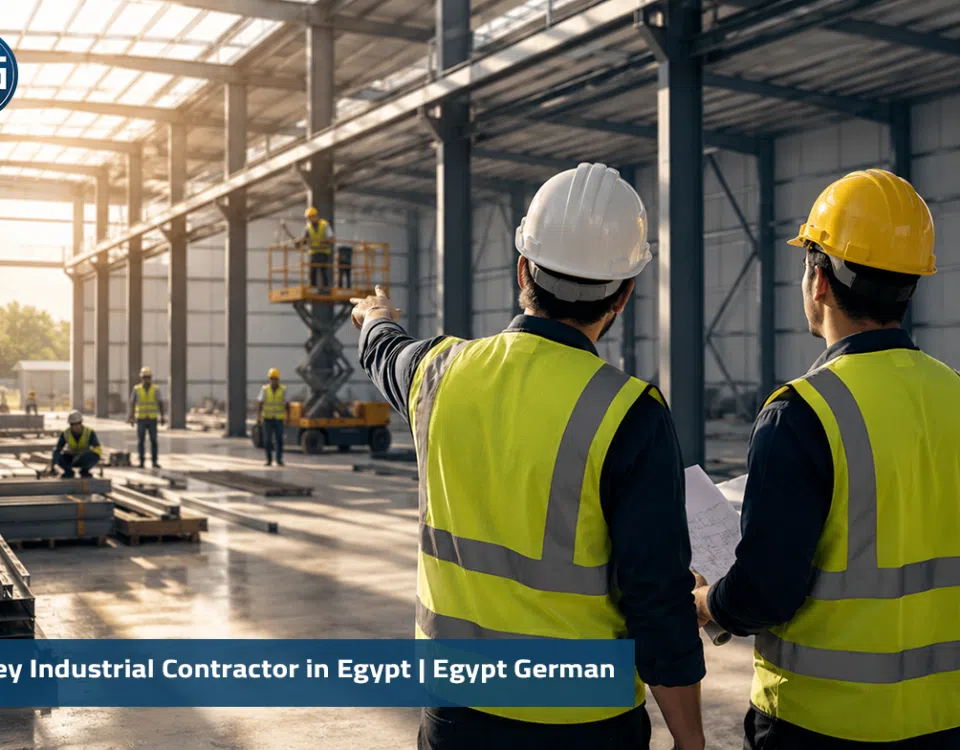
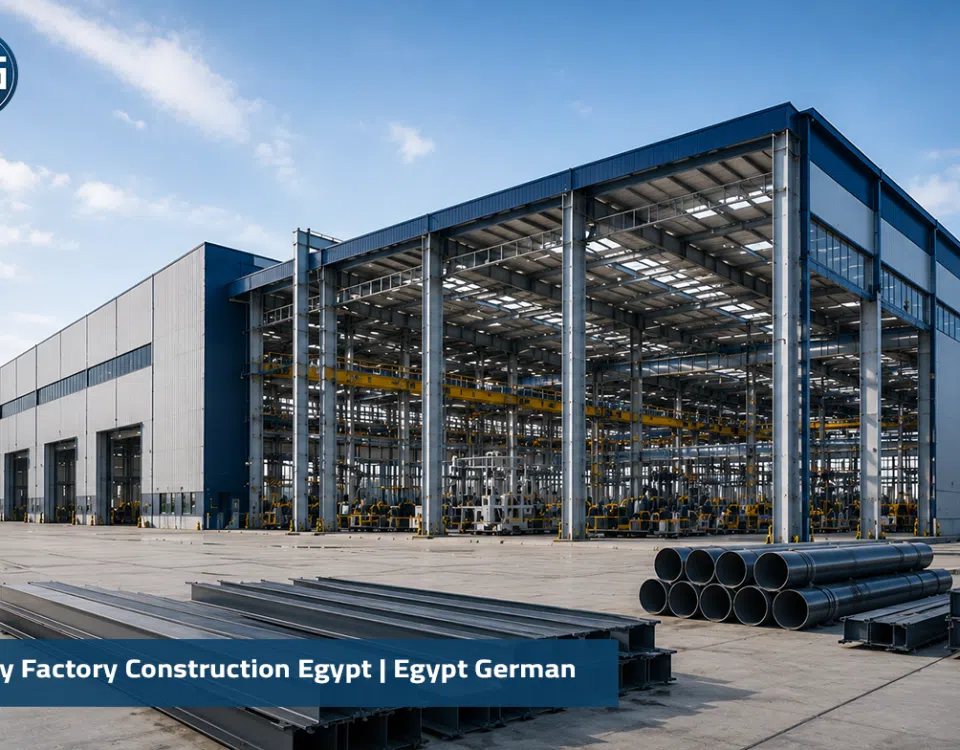
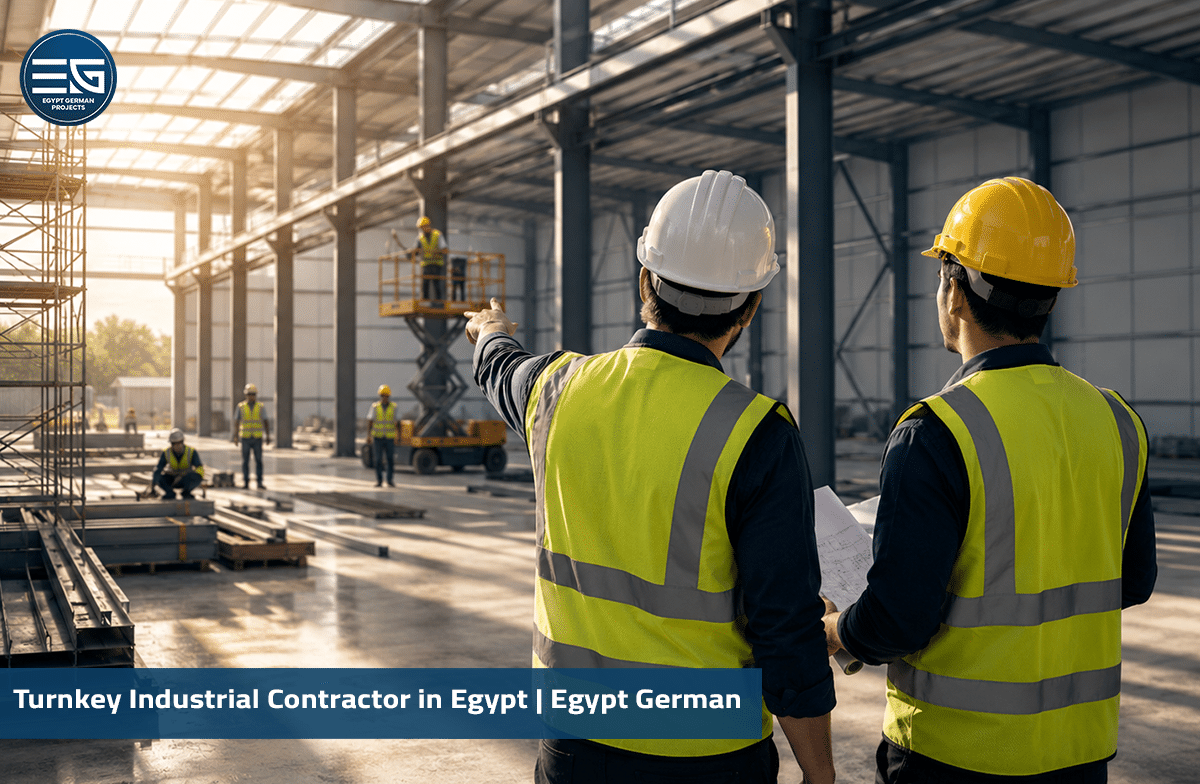
Large-scale industrial construction requires managing several complex phases at once. Contractors must excavate rocky terrain, engineer reinforced slabs for heavy equipment, and coordinate all civil, steel, and MEP work inside one BIM model.
Case Study : IVECO Suez: 8,000 sqm Industrial Facility on Rocky Terrain
The challenge
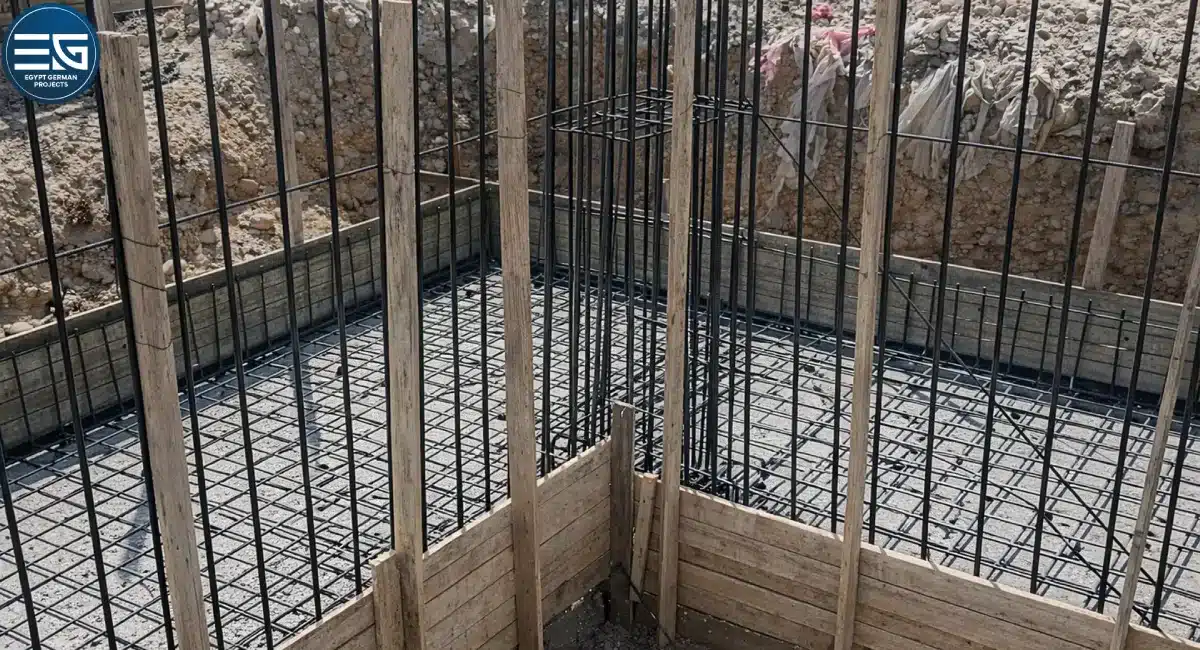
The Suez site required digging into hard limestone without disturbing nearby plots. Additionally, the factory floor needed to hold heavy stainless steel silos. This required specialized concrete slabs up to 400mm deep to distribute the immense weight.
The civil solution
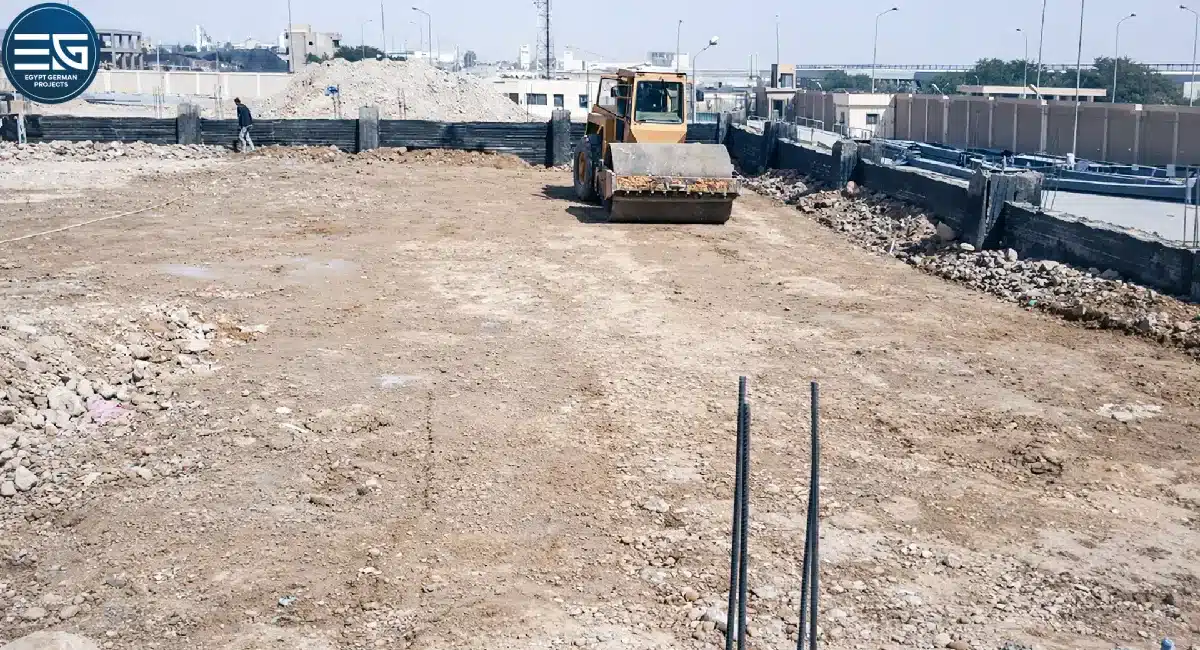
Egypt German used heavy rock-breaking gear to clear the site. We used 3D BIM modeling to check the silo positions before pouring any concrete. Finally, we added a multi-layer waterproofing system to protect the underground structures.
The result
The 8,000 sqm facility (5,000 sqm warehouse / 3,000 sqm factory) was handed over with zero structural maintenance requirements in its first operational year, despite operating in a high-humidity coastal environment. Simultaneous civil, steel, and MEP delivery under a single turnkey contract compressed the commissioning timeline.
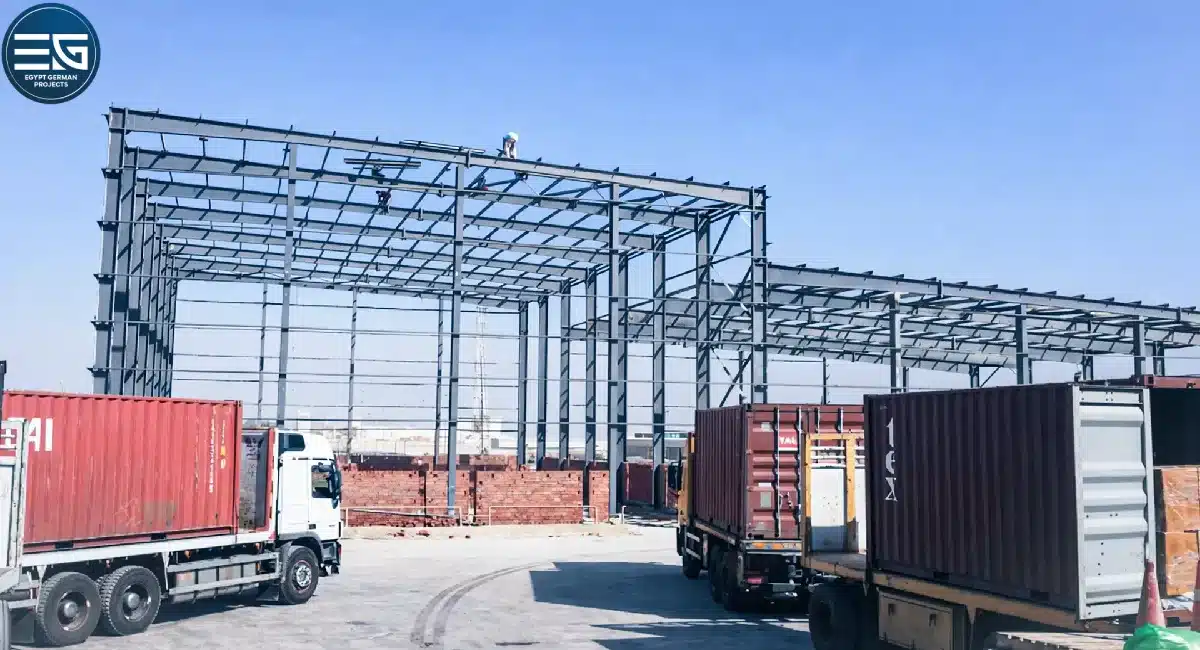
Project Quick Facts:
- Location: Suez Industrial Zone
- Size: 5,000 sqm warehouse / 3,000 sqm factory
- Terrain: High-density rock
- Structure: Reinforced concrete and high-span steel frame
- Special Features: Silo foundations and chemical-resistant insulation
Frequently Asked Questions About Civil Construction Work
What is the difference between civil work and construction work?
Construction is the broad term covering all building activity. Civil work is a specific stage within construction that focuses on the structural base — site preparation, foundations, concrete frames, and buried infrastructure. Civil work must be completed before any other construction trade (MEP, fit-out) can begin.
What does civil work include in a construction project?
Civil work covers:
- Soil testing and site leveling.
- Digging and moving earth.
- Building foundations (piles, footings, or concrete rafts).
- Pouring concrete columns, beams, and floors.
- Installing drainage and utility trenches.
- Waterproofing underground concrete.
What is a civil construction worker?
A civil construction worker is a trained professional who builds the structural phases of a project. This role includes heavy machine operators, concrete pourers, steel fixers, and carpenters. Engineers handle the design work, while trade professionals manage the daily physical building on-site.
What is the meaning of civil works in a contract?
Under FIDIC or Egyptian Engineering Code contracts, “civil works” refers to the permanent physical structure built at or below ground level. This includes foundations, concrete frames, drainage, and earthworks.
How long does civil construction work take for an industrial facility?
Civil works for a mid-size facility (5,000–15,000 sqm) usually take 3 to 6 months. Your exact timeline depends on three factors:
- Site soil conditions.
- The complexity of your foundation design.
- Your contract structure (turnkey vs. sequential).
Planning a Civil Works Project in Egypt or the MENA Region?
Egypt German delivers integrated civil, structural, and MEP construction across Egypt’s industrial zones — from geotechnical planning to handover. Talk to our engineering team about your site conditions and project requirements.