Industrial HVAC installation goes far beyond basic cooling. It requires careful planning to match your building’s exact layout with its total heat load. In hot climates like the MENA region, a successful setup depends on three things: precise 3D design, heavy-duty equipment, and expert airflow balancing. This guide explains how to install reliable, fail-safe climate control in your factory, warehouse, or logistics hub.
What Is HVAC Installation?
HVAC installation involves sizing, mounting, and balancing systems that control indoor temperature, humidity, and air quality.
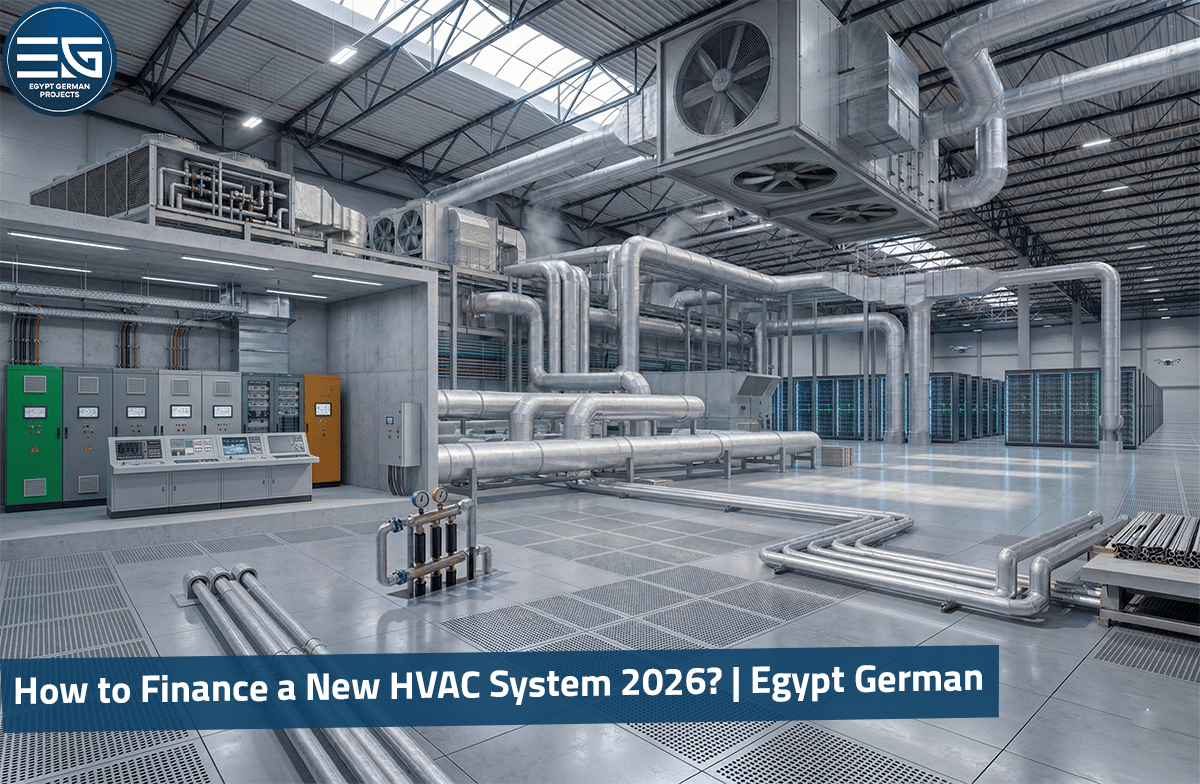
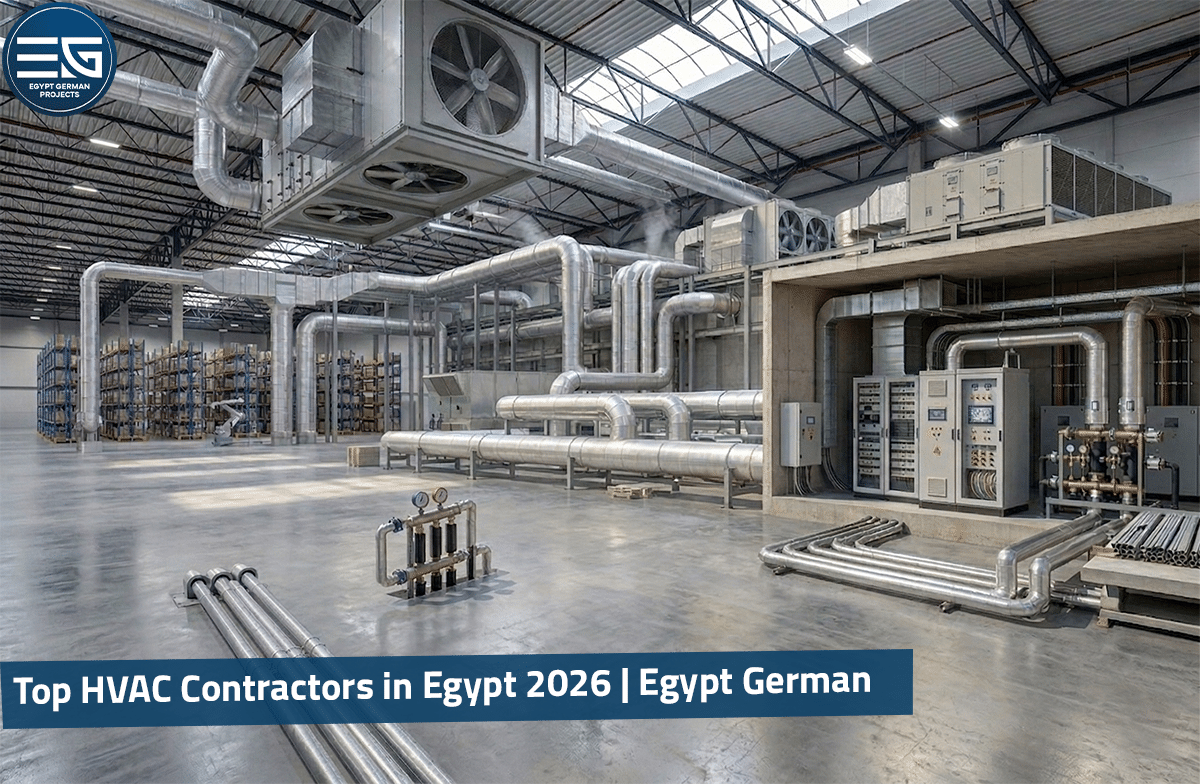
At an industrial scale, an HVAC system is a network of heavy-duty machines. It uses chillers, air handling units (AHUs), and automated exhaust fans. These systems are built to protect factory machinery, preserve inventory, and keep workers safe in extreme heat.
What Is the Step-by-Step Process for a Professional HVAC Installation?
A professional HVAC installation follows six strict engineering steps. Skipping any of these steps will lead to building errors and equipment failure.
- Load Calculation: Engineers measure the building size, sunlight heat, insulation, and machinery heat. This tells them exactly how many Tons of Refrigeration (TR) you need.
- BIM System Design: Designers create 3D layouts. This ensures massive air ducts do not crash into structural steel or electrical trays during building.
- Equipment Selection: Engineers match your building to the right system, such as Chilled Water, VRF, or Rooftop Units (RTUs).
- Technical Sourcing: We buy heavy-duty compressors and filters rated to survive 45°C+ high-ambient heat.
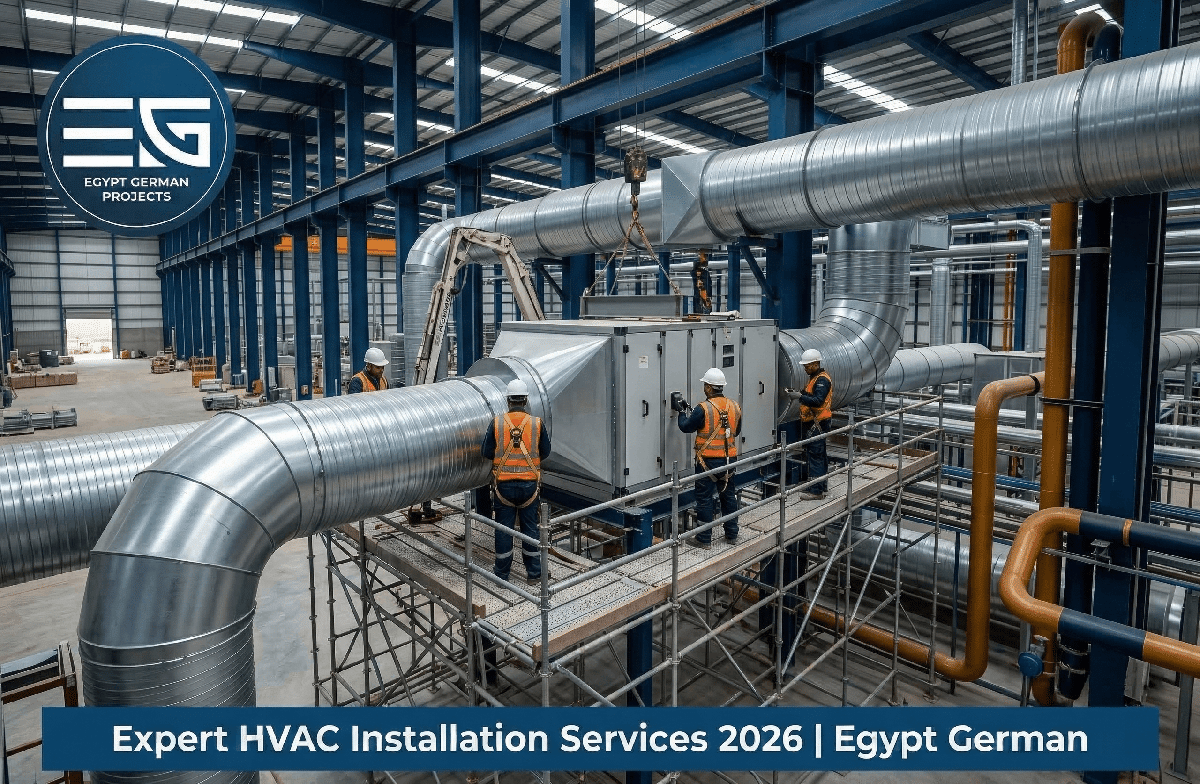
- Mechanical Construction: Teams build leak-proof air ducts, weld pipes, and connect the Building Management System (BMS).
- Testing & Commissioning: We balance the air flow. This ensures every room gets the exact amount of cooling it needs.
How Do You Select the Right HVAC System for Industrial Facilities?
System selection depends on total facility volume, peak process heat, and operational budget. Chilled water suits massive plants, VRF offers efficient zoning, and RTUs optimize open-space warehouses.
There is no single solution for every building. Selecting the wrong architecture will permanently cripple your operational expenditure (OpEx).
| Facility Type | Recommended System | Primary Engineering Benefit |
|---|---|---|
| Logistics Warehouse | RTU (Rooftop Units) | Rapid deployment, zero indoor footprint, cost-effective open-space cooling. |
| Manufacturing Plant | VRF System | Independent zoning isolates localized process heat with exceptional partial-load efficiency. |
| Heavy Industrial / Airport | Chilled Water + AHU | Lowest cost-per-ton at massive scale, 25-year lifespan, centralized maintenance. |
| Cleanroom / Pharma | Chilled Water + HEPA | Strict positive-pressure control and absolute airborne pathogen elimination. |
How Is HVAC Installed in High-Bay Warehouses?
Warehouse cooling must neutralize thermal stratification in 15-meter high-bays and combat massive heat infiltration at loading docks using destratification fans and specialized positive pressure boundaries.
Warehouses create unique thermodynamic challenges that standard commercial systems cannot resolve:
- Thermal Stratification: Cold air sinks while trapped heat bakes the upper storage racks. Engineers deploy High-Volume Low-Speed (HVLS) destratification fans to force conditioned air downward, preventing massive energy loss.
- Loading Dock Infiltration: Constant bay door operations allow extreme outdoor heat to flood the facility. We engineer high-velocity air curtains and positive pressure ventilation to create an invisible thermal barrier at the loading perimeter.
Warehouse Sizing Benchmark (High-Ambient Climate)
Note: Due to severe solar gain in arid climates, high-bay warehousing typically requires 10–15 TR per 1,000 sq m.
| Warehouse Size | Recommended System | Typical Cooling Load |
|---|---|---|
| Under 3,000 sq m | Rooftop Units (RTU) | 30 – 45 TR |
| 3,000 – 7,000 sq m | VRF / Advanced RTU | 45 – 100 TR |
| Over 7,000 sq m | Central Chilled Water | 100+ TR |
What Are the Unique HVAC Requirements for Factories?
Factory HVAC installation requires custom calculations that isolate massive internal machinery heat loads and toxic vapor extraction from standard human comfort requirements to prevent system failure.
Standard load calculations will cause an active production floor to overheat immediately. Industrial designs must incorporate:
- Process Heat Integration: Calculating the massive thermal exhaust generated by industrial ovens, compressors, and packaging lines.
- Fume Extraction: High-velocity exhaust networks to remove volatile organic compounds (VOCs) and welding fumes, ensuring compliance with the Egyptian Code for HVAC (ECP 377).
- Hazardous Area Ventilation: ATEX-rated explosion-proof extraction fans and spark-resistant ductwork for chemical and food processing zones.
Why Do Industrial Facilities Require BIM Clash Detection?
Building Information Modeling (BIM) uses 3D software to map out the building before construction starts. It stops air ducts from crashing into plumbing or electrical lines.
Trying to fit 2-meter-wide industrial ducts using flat 2D drawings causes massive delays. BIM solves these physical space problems on a computer first. This stops expensive mistakes, reduces waste, and keeps the project on time.
What Factors Determine HVAC Installation Costs in 2026?
Your upfront cost is determined by equipment size. Your long-term cost is determined by system efficiency, automated controls, and insulation.
Electricity prices are rising. Buying the cheapest equipment upfront is usually a mistake. Spending 20% more on high-efficiency equipment (like variable-speed compressors) often pays for itself within 3 to 5 years through lower power bills.
| HVAC System | Initial Cost (CapEx) | Long-Term Cost (OpEx) | Energy Efficiency Profile |
|---|---|---|---|
| Packaged RTUs | Low | Moderate | Best for single-zone, constant-volume spaces. |
| VRF Systems | Medium | Low | Highly efficient for multi-zone, variable-load schedules. |
| Chilled Water | Highest | Lowest | Maximum efficiency for 24/7 heavy industrial operations. |
Case Studies: Real-World Industrial Execution
Selecting an EPC contractor requires proven MENA-region execution. Egypt German integrates engineering, procurement, and construction, delivering high-ambient climate control for over 50 mega-facilities across Egypt.
Real-world deployment requires more than theoretical calculations. It requires boots-on-the-ground MEP coordination.
Egypt German Performance Metrics:
- Total Turnkey Projects Delivered: 53
- Active Partners: 33
- Net Capital Portfolio: 1.31 Billion EGP
- Sectors Operated: 6 (including Heavy Industrial, Logistics, and Commercial)
Sudan Cotton Gin Factory: Operating a cotton gin involves 45°C+ heat and massive amounts of explosive dust. We built a custom ventilation network with heavy-duty filters. This stopped dust from choking the compressors and ensured zero heat-related shutdowns.
Logistics Hub Upgrades: We linked smart Building Management Systems (BMS) with chilled water cooling in massive 15-meter-high storage hubs. This successfully stabilized the temperatures to protect sensitive pharmaceutical shipments.
FAQ About HVAC Installation
How long does an industrial HVAC installation take?
A standard installation takes 10 to 16 weeks. This includes 3D design, equipment ordering, construction, and final testing.
What is HVAC commissioning and why is it mandatory?
Commissioning is the final testing phase. Technicians measure the air pressure to prove the system delivers the exact right amount of air to every room.
Can a factory use standard commercial air conditioning?
No. Standard commercial units will fail. They do not have the heavy-duty compressors or advanced filters needed to survive factory heat and industrial dust.
What refrigerants comply with 2026 environmental regulations?
To avoid fines and comply with the Kigali Amendment, modern systems use eco-friendly, low-GWP refrigerants like R-32 and R-454B.
What is the difference between a turnkey installation and standard procurement?
A turnkey installation means one contractor handles everything. They design it, buy the parts, build it, and test it. This eliminates arguments between different contractors and saves you money.