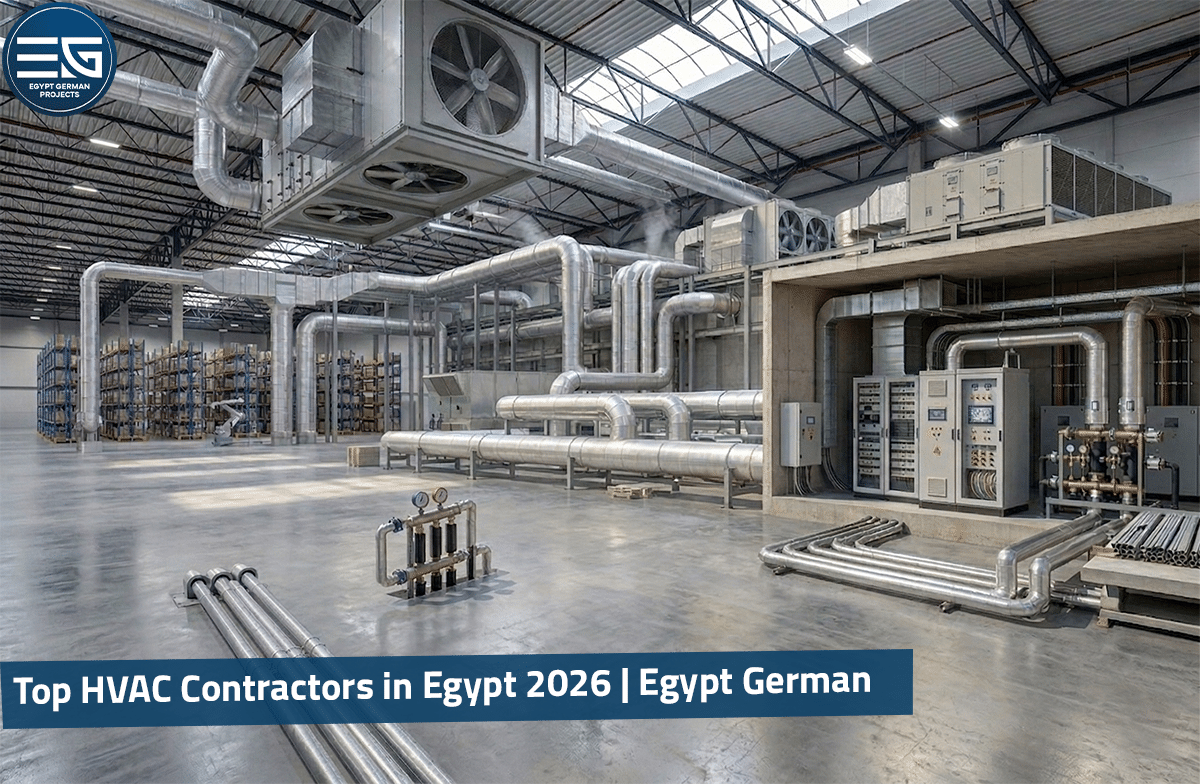
Industrial facilities rely on properly engineered HVAC systems to maintain safe, efficient, and uninterrupted operations. Expert HVAC contractors design, install, and maintain the heating, ventilation, and air conditioning infrastructure that supports manufacturing facilities, warehouses, hospitals, and commercial buildings.
From chilled water plants and VRF systems to advanced building automation controls, professional HVAC engineering cuts energy use. It improves indoor air quality. It also supports long-term operational reliability across Egypt’s growing industrial sector.
What Do Expert HVAC Contractors Do?
Professional HVAC contractors design, install, and maintain large-scale heating, ventilation, and air conditioning systems to ensure optimal climate control and energy efficiency.
In commercial and industrial construction, managing indoor air quality and temperature is a complex engineering task. An expert HVAC installer does not just hang units on a wall; they engineer an entire thermal management ecosystem. This involves calculating heat loads, fabricating precise ductwork, integrating mechanical networks, and ensuring that the final setup complies with strict environmental and safety regulations.
How Do You Choose the Best HVAC System Company?
Choose an HVAC company with proven industrial experience, certified engineers, advanced 3D modeling capabilities, and a strong track record of successful project execution.
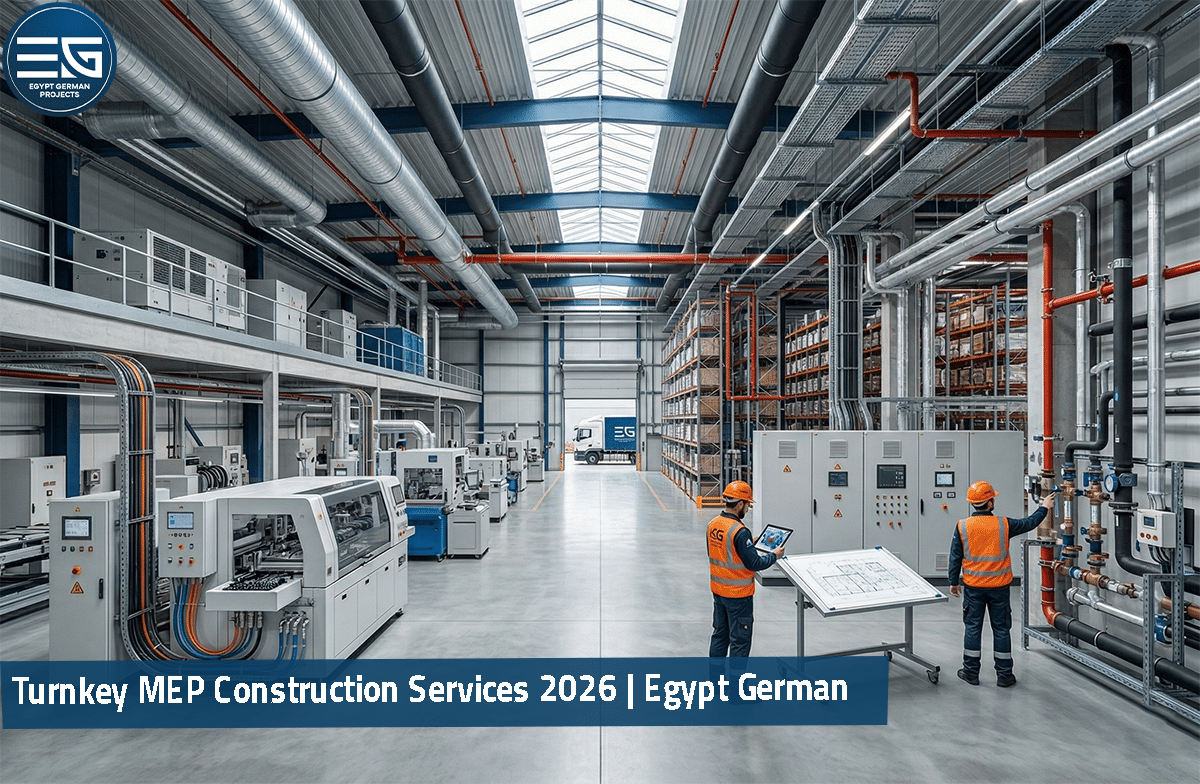
When evaluating AC contractors for a massive development, it is crucial to look beyond the initial price quote. The best installation companies provide comprehensive integrated MEP services meaning they ensure your air conditioning works flawlessly alongside your electrical and plumbing networks without physical clashes. Always look for contractors who adhere to global ASHRAE (American Society of Heating, Refrigerating and Air-Conditioning Engineers) standards.
What Are the Most Common Commercial HVAC Types?
The most common commercial setups include chilled water systems for massive facilities, VRF systems for zoned climate control, and packaged rooftop air units.
Selecting the right technology is the first step toward long-term efficiency. The two most dominant systems in modern Egyptian industrial hubs are Chilled Water and VRF.
How Do HVAC Chilled Water Systems Work?
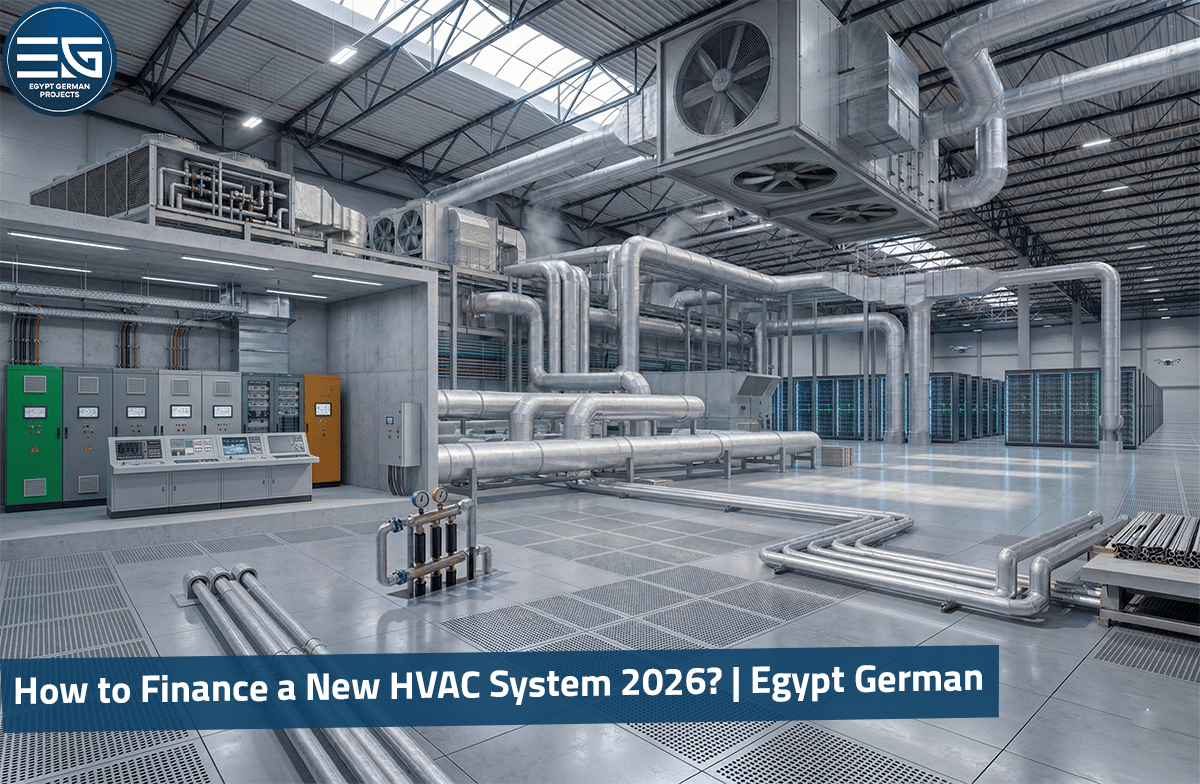
Chilled water systems use water to spread cooling across massive industrial spaces. This setup provides excellent energy savings and long-term reliability.
For massive industrial sites, this system is the gold standard. Instead of running chemical coolant through a huge building, a central chiller cools water down. Pumps then send this cold water to air handlers across the site. This is perfect for factories and logistics hubs, like the 24,000-square-meter EVA Project.
What Is a Variable Refrigerant Flow (VRF) System?
A VRF system allows simultaneous heating and cooling in different building zones by precisely controlling the flow of refrigerant to multiple indoor units.
VRF technology is highly efficient for office buildings, hospitals, and hotels where different rooms require different temperatures at the same time.
Comparing High-Capacity HVAC Systems
| Feature | HVAC Chilled Water System | VRF (Variable Refrigerant Flow) System |
| Primary Mechanism | Uses chilled water pumped to handling units | Varies refrigerant flow to individual indoor units |
| Best Use Case | Massive industrial plants, large campuses | Multi-zone office buildings, high-rise hotels |
| Energy Efficiency | Extremely high at a massive scale | Excellent for variable, zone-specific demands |
| Installation Complexity | Requires extensive heavy piping and pump rooms | Easier to route flexible refrigerant lines |
How Much Does Commercial HVAC Installation Cost in Egypt?
Commercial HVAC costs depend on building size, cooling needs, system type, duct layout, and smart controls.
Industrial budgets require looking at project details rather than flat-rate square-meter estimates. The primary cost drivers include:
- Total Cooling Load (Tonnage): Packed factory floors or glass corporate towers need high cooling power, which increases equipment sizes.
- System Architecture: Central chilled water plants cost more upfront than modular VRF setups.
- Ductwork Design: Custom sheet metal work, internal insulation, and long air networks heavily change material and labor costs.
- Automation Level: Adding smart controls and Building Management Systems (BMS) raises the price now but saves major energy money later.
What Is the Commercial HVAC Installation Process?
The installation process involves heat load math, 3D duct design, buying gear, field building, and strict system testing.
Top HVAC companies follow a strict step-by-step plan to prevent system failures down the road:
- Heat Load Math: Engineers calculate the exact cooling power needed based on people, tools, and sun heat.
- 3D Design (BIM): Designers map out the ductwork digitally so it does not hit power trays or water lines.
- Fabrication & Piping: Teams build custom air ducts and weld heavy-duty pipes into place.
- Equipment Placement: Workers securely position chillers, air handlers, and control panels.
- Testing: The team tests the system under heavy stress to ensure airflow and temperatures are perfect before handover.
Why Is an Advanced HVAC Control System Important?
Modern control systems use digital twins and smart sensors to automate temperature adjustments, predict maintenance needs, and significantly lower overall facility energy consumption.
In 2026, simply “cooling the air” is not enough. The brain of your building lies in its control system. By integrating smart sensors, facility managers can monitor equipment health in real-time, receiving alerts for preventative maintenance before a catastrophic breakdown occurs. This level of control is often required to achieve green building certifications like the LEED (Leadership in Energy and Environmental Design) standards.
Why Partner with Egypt German for Your HVAC Needs?
The engineering teams at Egypt German deliver flawless HVAC and MEP work built to handle Egypt’s toughest industrial sites.
With 15 years of work and a portfolio of over 50 large developments, we manage your system’s entire lifespan. Our technical skill is proven by major projects, including the massive 24,000-square-meter EVA Project.
Global leaders—including Nestlé, Orascom, JOTUN, and Americana—trust Egypt German to build high-capacity climate systems. From custom 3D design and heavy-duty HVAC installation to ongoing upkeep, we keep your building running. Contact us today to get a custom Request for Quotation (RFQ) for your project.
FAQ About HVAC Contractors
What makes a good HVAC installer?
A good installer has deep technical skills, follows international safety rules, calculates heat loads accurately, and builds leak-free ducts.
Do HVAC companies make their own ductwork?
Top-tier companies build their own ducts. This ensures exact sizing, tighter quality control, and faster build times on the job site.
What is preventative HVAC maintenance?
Preventative care means routine checks, filter changes, and mechanical cleanings. This keeps your system efficient and stops sudden, costly breakdowns.
How long does commercial AC installation take?
It depends on building size. Commercial setup can take a few weeks for standard designs, or several months for massive industrial plants.
Why hire integrated MEP and HVAC contractors?
Hiring an integrated team ensures cooling, wiring, and plumbing networks are designed together. This eliminates costly physical clashes and project delays.
Which HVAC system is better for factories: VRF or chilled water?
Chilled water systems are generally better for large factories because they deliver higher cooling capacity and lower operating costs at scale. VRF systems are often more suitable for office buildings, hotels, and facilities requiring independent temperature control in multiple zones.