If you’re building a factory or warehouse in Egypt, MEP construction decides whether your facility opens on time. This guide explains what MEP means, how it’s executed, and what separates a well-run MEP contract from one that causes delays.
What Is MEP Construction?
MEP is the design and installation of a building’s mechanical, electrical, and plumbing systems — the three disciplines that make a structure functional and safe.
MEP stands for Mechanical, Electrical, and Plumbing. It covers everything inside a building that isn’t the structural frame. That includes the ductwork that controls air temperature, the cables that carry power, and the pipes that move clean water in and waste out.
Without MEP, a building is a shell. A finished concrete and steel structure with no working HVAC, no power distribution, and no plumbing cannot be occupied. MEP is what turns a structure into a working facility.
What Does Each Component of MEP Construction Cover?
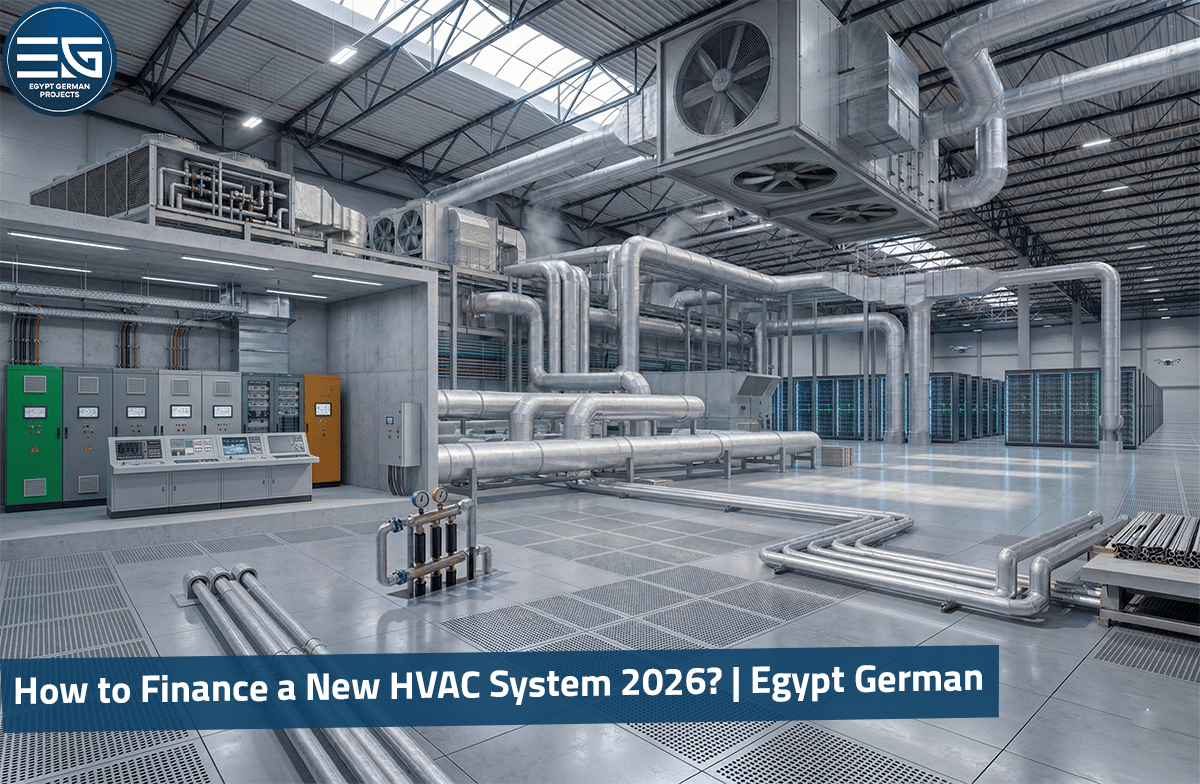
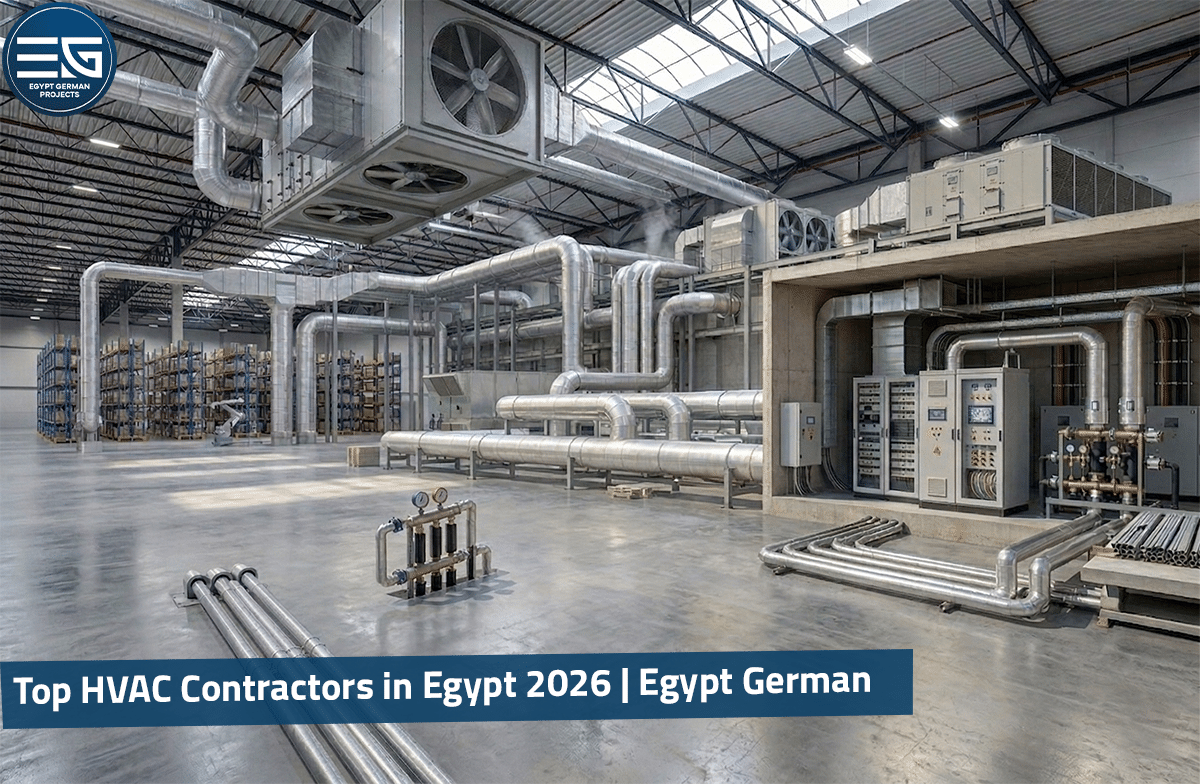
Mechanical covers HVAC and fire suppression. Electrical covers power, lighting, and data. Plumbing covers water supply and drainage. All three must be coordinated from the design stage.
| Discipline | What It Covers | Main Failure Risk | Egypt-Specific Note |
|---|---|---|---|
| Mechanical | HVAC, industrial cooling, ventilation, fire suppression | Undersized cooling for Egypt’s summer heat | HVAC must meet HBRC energy benchmarks for Pyramid Certificate |
| Electrical | Power distribution, generators, lighting, CCTV, smart meters | Cable routing conflicts with HVAC ductwork | Smart metering is mandatory in major development zones |
| Plumbing | Water supply, drainage, wastewater, greywater recycling | Pipe routing conflicts with structure | Greywater recycling may be required for sustainability targets |
| Life Safety | Fire alarms, emergency lighting, smoke control, evacuation | Fire alarms not linked to HVAC smoke dampers | Authority approval is required before occupancy |
What Is MEP&LS and How Does It Differ from Standard MEP?
MEP&LS adds Life Safety systems as a fourth discipline. It means fire suppression, alarms, and evacuation are designed as part of the building rather than added later.
The term MEP&LS is now standard in many Egyptian building contracts. Life Safety systems are essential for occupancy approval and operational compliance.
A typical MEP&LS scope includes:
- Mechanical fire fighting systems including sprinklers, fire pumps, and foam systems
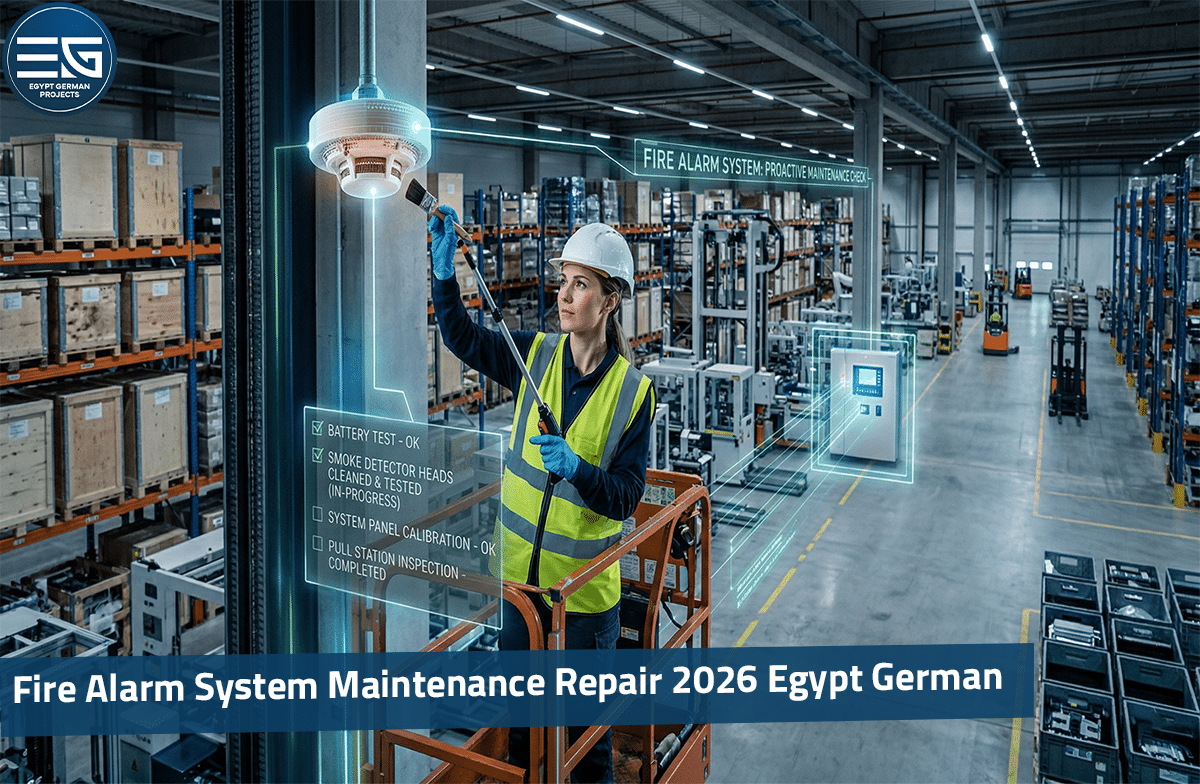
- Fire alarm and detection systems
- Smoke control systems integrated with HVAC infrastructure
- Emergency lighting and evacuation support systems
The key requirement is integration from the beginning of the design process. Late incorporation of Life Safety systems often results in redesign, coordination conflicts, and increased costs.
In What Order Is MEP Construction Carried Out?
MEP follows five primary stages: design and BIM coordination, buried services, rough-in installation, plant room installation, and testing and commissioning.
| Stage | What Happens | If Rushed or Skipped |
|---|---|---|
| Design & BIM Clash Detection | All MEP systems are coordinated in a 3D model before construction | Clashes are discovered during installation |
| Buried Services Installation | Underground drainage and conduits are installed before concrete works | Concrete may need to be broken for corrections |
| Above-Ceiling Rough-In | Ductwork, cable trays, and piping systems are installed | Services compete for the same space |
| Plant Room Installation | Chillers, generators, and fire pumps are positioned and connected | Equipment access issues create delays |
| Testing & Commissioning | All systems are tested and validated together | Uncoordinated systems fail performance tests |
The Coordination Problem
When MEP work is divided across multiple subcontractors, no single party owns overall coordination. This often leads to commissioning delays, increased rework, and disputes regarding responsibility.
Turnkey MEP vs Separately Subcontracted MEP
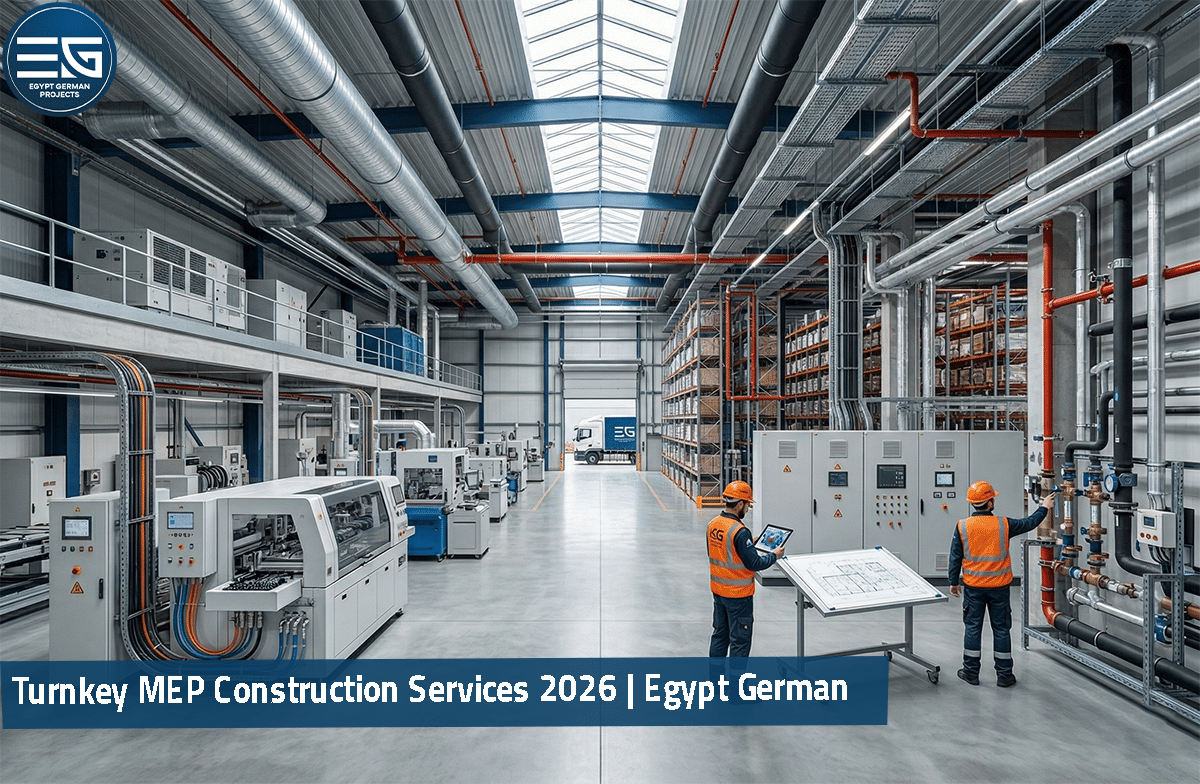
Turnkey MEP means one contractor manages all disciplines under a single contract. Separate subcontracting requires the client to coordinate multiple parties.
| Factor | Turnkey MEP | Separately Subcontracted MEP |
|---|---|---|
| Coordination | Single team and single BIM model | Multiple contractors with separate priorities |
| Clash Resolution | Resolved before installation | Often discovered on site |
| Programme Risk | Centralized project control | Delays can cascade between contractors |
| Commissioning | Integrated testing process | Separate testing and coordination challenges |
| Compliance | Unified reporting and documentation | Client must consolidate information |
| Best For | Factories, warehouses, logistics hubs, and industrial facilities | Small fit-out projects |
What Makes MEP Construction in Egypt Different?
Egypt’s climate, industrial requirements, and sustainability regulations create unique engineering challenges that influence MEP design and installation.
Thermal Loads in Industrial Facilities
Summer temperatures frequently exceed 40°C in many industrial zones. HVAC systems must be designed using local climate conditions and adequate capacity margins to ensure reliable operation.
Corrosion Protection in Coastal Areas
Facilities located near the Suez Canal and Mediterranean coast require enhanced corrosion protection. Material selection is critical for maintaining long-term system performance.
Pyramid Certificate Compliance
Egypt’s green building framework emphasizes measurable performance in energy efficiency, water conservation, and indoor environmental quality.
- Smart utility metering and building management systems
- Water-efficient fixtures and greywater recycling
- Indoor air quality monitoring and ventilation control
Industrial developments in SCZone, 10th of Ramadan City, 6th of October City, and the New Administrative Capital often require advanced MEP coordination, energy-efficient HVAC systems, and compliance with HBRC sustainability guidelines.
Egypt German Projects: IVECO Suez Industrial Facility
Project Area: 8,000 sqm
Location: Suez, Egypt
Contract Type: Turnkey MEP
Scope: HVAC, Electrical, Plumbing, Fire Fighting, Life Safety
The Challenge
The facility required industrial HVAC systems, fire protection infrastructure, chemical drainage solutions, and coordination across multiple engineering disciplines.
The Solution
All mechanical, electrical, plumbing, and life safety systems were delivered under a single contract using a unified BIM model. Coordination issues were resolved digitally before installation began.
The Result
The facility of IVECO Suez successfully completed testing, commissioning, and inspections through a fully integrated project delivery approach.
What Does an MEP Engineer Do on an Industrial Construction Project?
An MEP engineer designs, coordinates, and supervises the installation of a building’s internal systems while ensuring compliance, performance, and integration.
Typical responsibilities include:
- Designing MEP systems and sizing equipment
- Performing BIM coordination and clash detection
- Reviewing technical specifications and procurement packages
- Supervising construction activities and inspections
- Managing testing, commissioning, and handover documentation
Why Egypt German?
- 15+ years of industrial construction experience
- 50+ completed projects across Egypt
- BIM-driven MEP coordination
- Turnkey EPC delivery capabilities
- Specialized industrial and logistics expertise
Planning an MEP Installation for a Facility in Egypt?
Egypt German delivers integrated turnkey MEP services covering mechanical, electrical, plumbing, and life safety systems from BIM coordination through commissioning and handover.
Frequently Asked Questions About MEP Construction
What Is the Difference Between MEP and Electromechanical Works?
The terms are often used interchangeably. MEP explicitly includes plumbing alongside mechanical and electrical systems.
How Long Does MEP Construction Take for an Industrial Facility in Egypt?
For medium-sized facilities, installation commonly requires three to five months after structural completion, followed by testing and commissioning.
What Does Factory MEP Installation in Egypt Involve?
Factory MEP systems typically include industrial HVAC, power distribution, process utilities, wastewater infrastructure, and fire protection systems designed for manufacturing operations.
How Does MEP Construction Support Pyramid Certificate Compliance?
MEP systems contribute through energy-efficient HVAC equipment, smart metering, water-saving fixtures, and sustainable water management strategies.
What Is the Role of BIM in MEP Construction?
BIM enables engineers to coordinate all building systems within a shared 3D environment and identify clashes before construction begins.
How Much Does MEP Construction Cost in Egypt?
MEP construction costs vary based on facility size, system complexity, HVAC requirements, electrical loads, and regulatory requirements. Industrial facilities typically require larger MEP investments than commercial buildings.
What Is Included in a Turnkey MEP Contract?
A turnkey MEP contract typically includes engineering design, BIM coordination, procurement, installation, testing, commissioning, and handover of all mechanical, electrical, plumbing, and life safety systems.
Who Is Responsible for MEP Coordination?
In a turnkey project, the MEP contractor is responsible for coordinating all disciplines through a single BIM model and project management framework.
What Codes Govern MEP Construction in Egypt?
MEP projects in Egypt typically follow Egyptian building codes, fire safety regulations, HBRC guidelines, and authority requirements depending on the project location and industry.