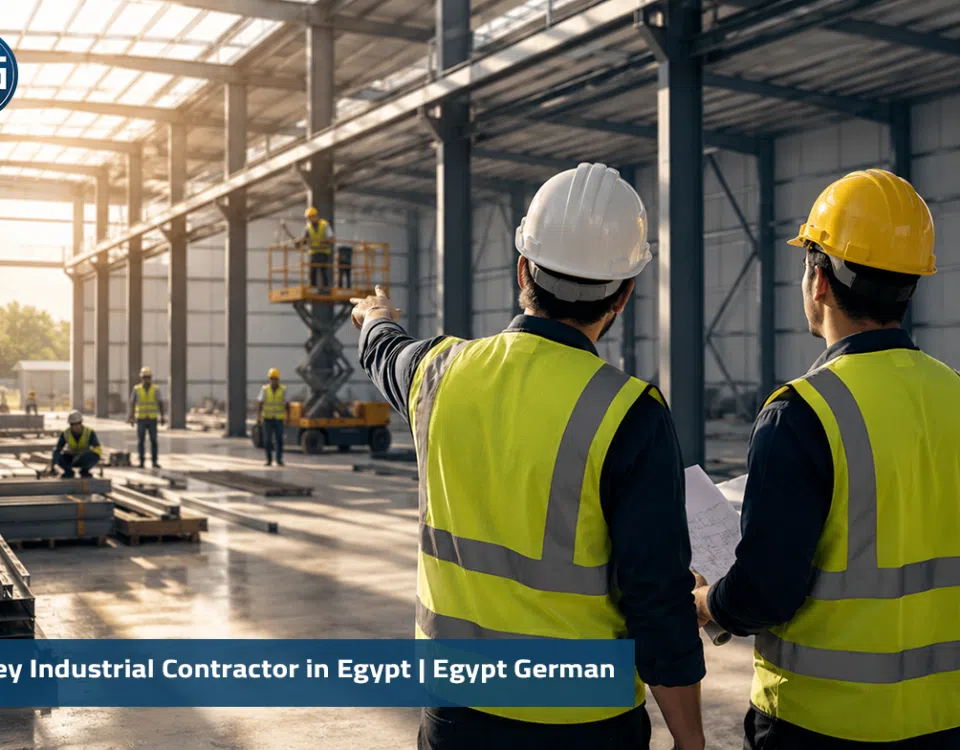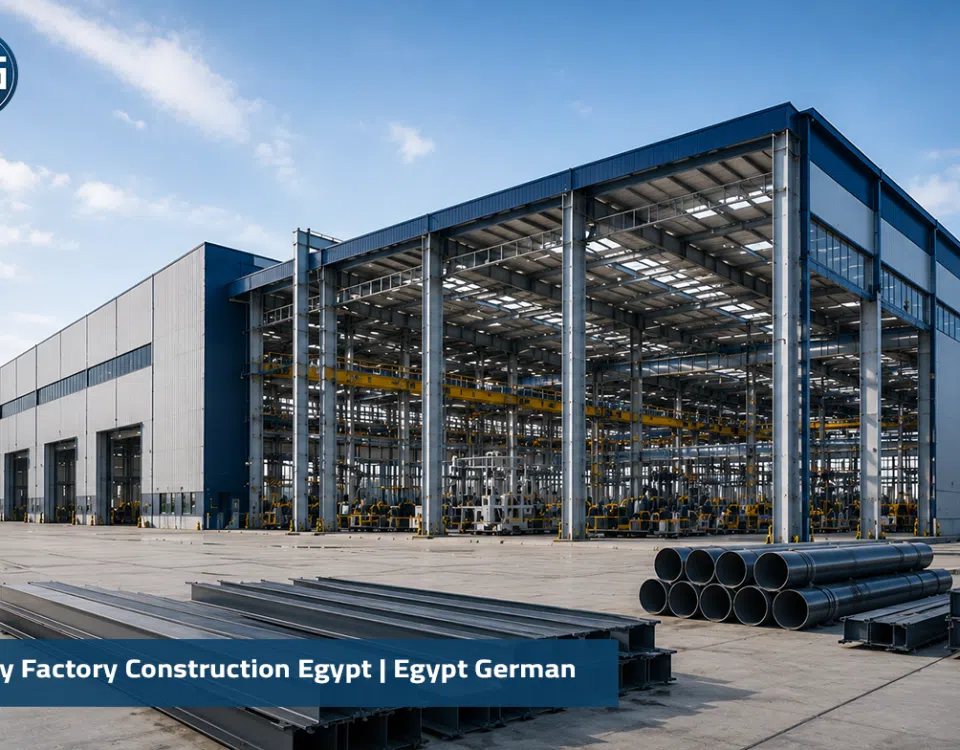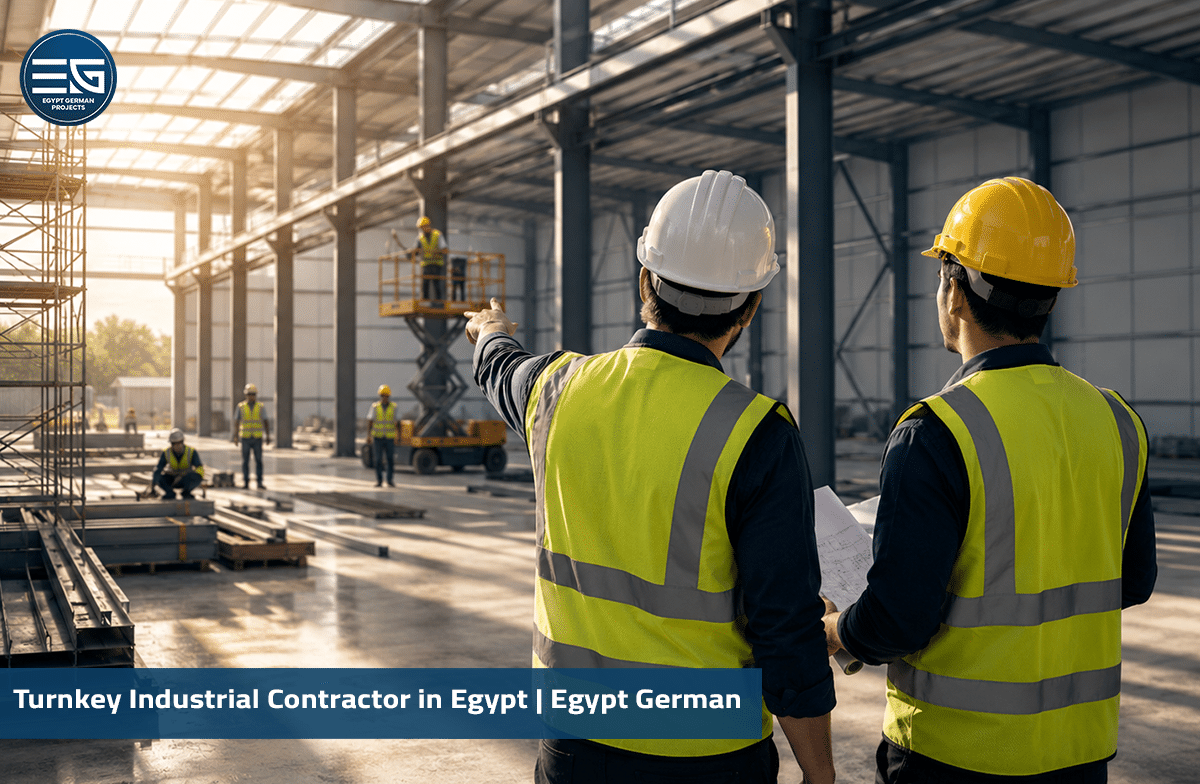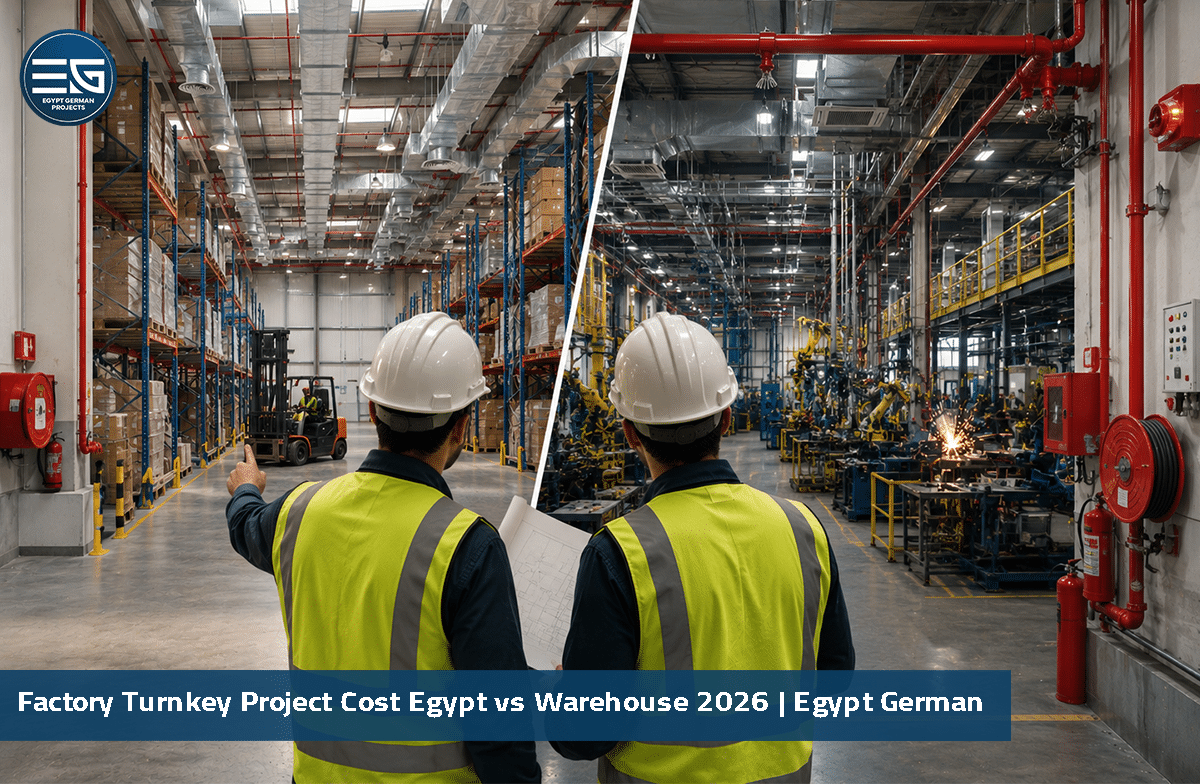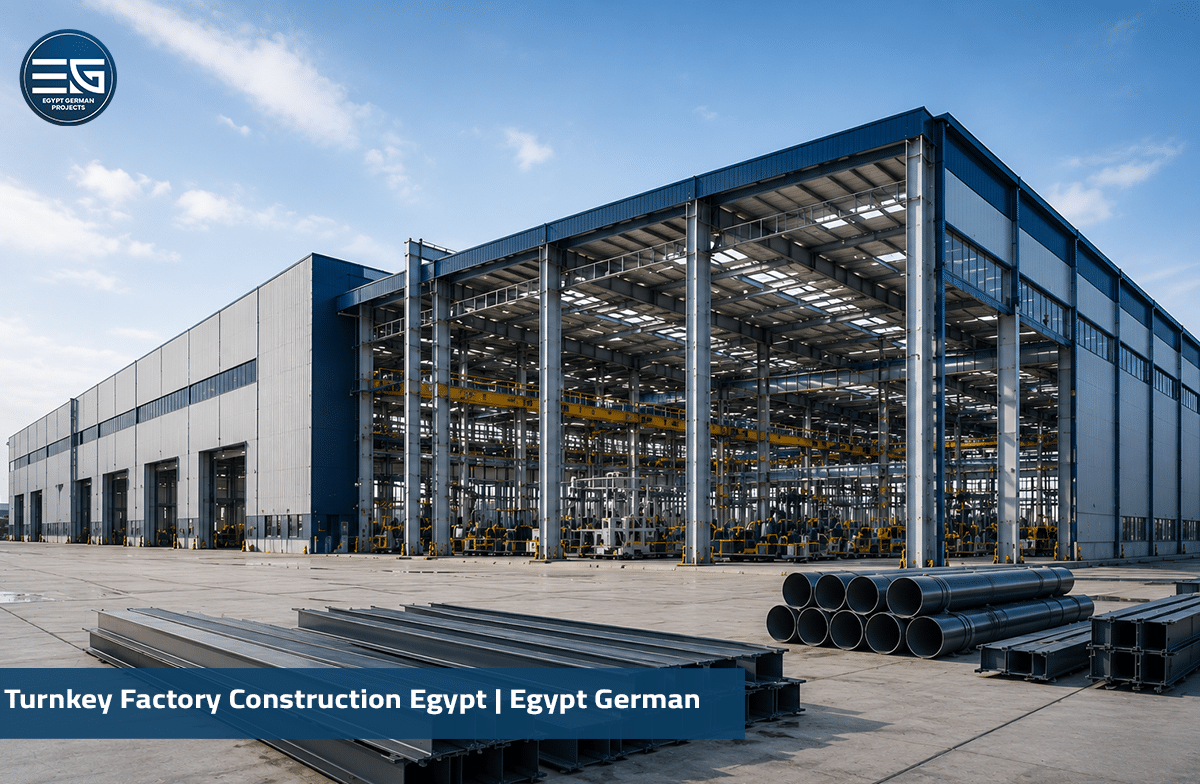
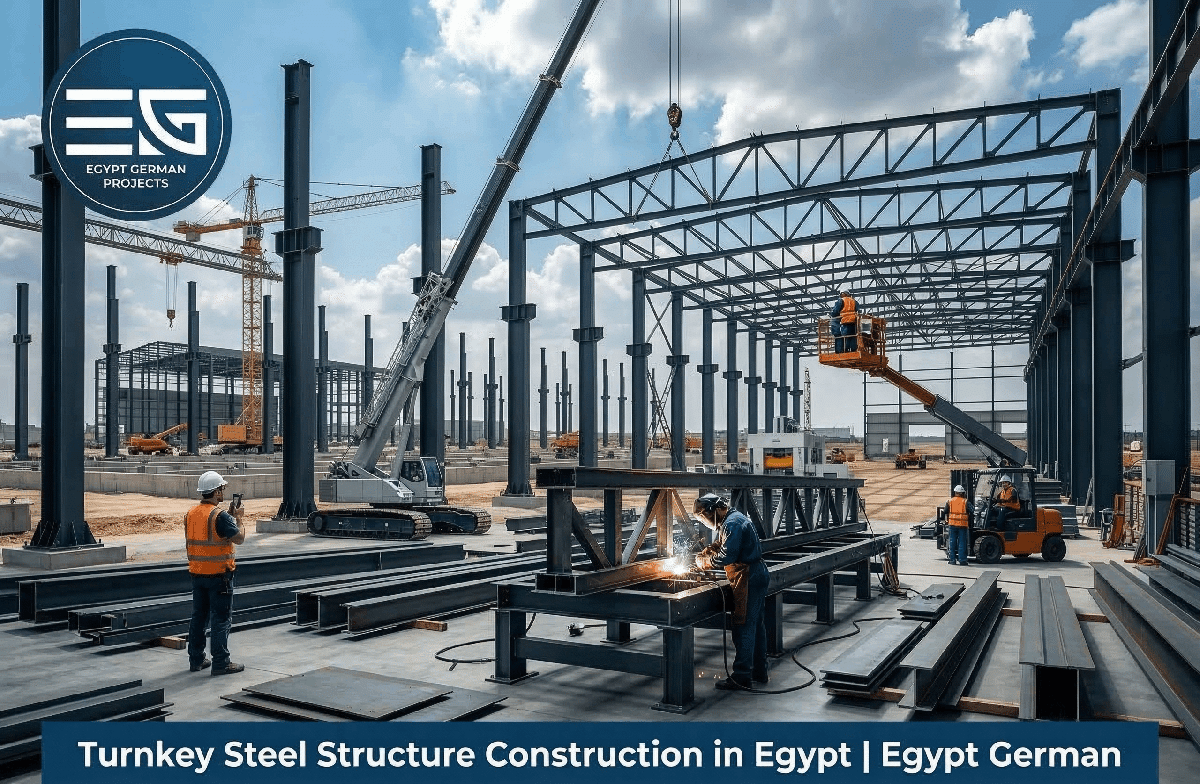
Steel structure construction is faster and cheaper than traditional concrete for industrial buildings in Egypt. By using pre-engineered parts and modern design software, investors can maximize warehouse space and beat tight project deadlines. Egypt German provides complete turnkey steel solutions built for your exact operational needs.
What Is Steel Structure Construction for Industrial Buildings?
An industrial steel structure uses a strong framework of steel beams and columns. This method builds durable, large-scale facilities much faster than old concrete methods.
Steel construction is now the top choice for developers in Egypt. Modern investors are moving away from slow-curing concrete. Instead, they choose fast, affordable, and tough steel building solutions. This modern building method safely holds the immense weight of industrial roofs and heavy equipment. It also offers great flexibility for future expansion.
What Are the Main Components of a Steel Structure?
The main parts of a steel structure include vertical columns, horizontal beams, supportive trusses, and metal wall panels that protect the building.
- Steel Columns and Beams: These form the main framework and carry the heaviest loads.
- Trusses and Frames: These angled parts support the roof and create wide walls.
- Metal Panels: These durable, insulated exterior sheets protect the facility from the weather.
Why Do EPC Contractors Choose Steel Over Concrete?
Steel construction cuts down build times because factories cut the parts with high precision. Teams then deliver them to the site and quickly bolt them together.
Industrial buildings need huge open spaces, high structural strength, and fast setups. Compared to traditional concrete, steel gives you a higher return on investment (ROI). Steel buildings lower your labor costs and need very little maintenance, providing excellent long-term value.
Comparing Building Materials for Industrial Projects
| Feature | Steel Structure Construction | Traditional Concrete |
|---|---|---|
| Construction Speed | Up to 50 percent faster | Slower due to concrete curing times |
| Clear-Span Width | Wide open spaces with no center columns | Limited width; requires bulky pillars |
| Foundation Costs | Lower because the structure is lighter | Higher because concrete is very heavy |
| Adaptability | Easy to expand, change, or take down | Hard and expensive to modify |
How Much Does Steel Structure Construction Cost in Egypt?
Steel structure costs in Egypt depend on your choice of span widths, crane capacities, heights, and foundations.
When you budget for an industrial build, looking at a single flat rate is misleading. Total spending depends on design complexity, not just raw square footage.
Cost Variations by Facility Type
- Industrial Warehouses: These are the simplest, most affordable builds. Costs depend on the required width between support pillars and the height needed for high pallet racks.
- Manufacturing Factories: These cost more per square meter. Heavy machinery and moving cranes shake the building. Because of this, engineers must reinforce the main steel frame to handle these vibrations safely.
- Logistics Centers: These buildings need plenty of loading docks and massive, column-free zones to sort goods. Your main costs here will be the heavy-duty floor slabs and automated sorting systems.
- Silo Projects: Bulk storage systems for grain or chemicals require specialized engineering. Costs depend on heavy sheet metal work, tall support towers, and mechanical handling gear.
Soil conditions dictate your foundational steel needs. Always evaluate your structural steel quotes alongside a final soil mechanics report to get an accurate financial forecast.
What Is the Steel Structure Construction Process?
The industrial steel construction process is a step-by-step cycle. It spans site evaluation, engineering design, factory fabrication, protective coating, and on-site assembly.
To protect your budget and ensure long-term structural safety, professional engineering procurement and construction (EPC) managers rely on a tightly controlled, phase-by-phase lifecycle.
The 10-Stage Project Lifecycle
| Phase | Operation | Core Objective |
|---|---|---|
| 1 | Site Survey | Map out exact coordinates and boundaries. |
| 2 | Soil Investigation | Check ground capacity to design a stable foundation. |
| 3 | Structural Design | Calculate exact engineering weight and stress loads. |
| 4 | BIM Modeling | Create a 3D digital model to prevent errors. |
| 5 | Fabrication | Cut, drill, and weld steel parts in a factory. |
| 6 | Surface Treatment | Apply sandblasting and anti-corrosion coatings. |
| 7 | Transportation | Haul oversized frames safely to the build site. |
| 8 | Erection | Assemble the framework using heavy mobile cranes. |
| 9 | Inspection | Run ultrasonic or torque tests on critical joints. |
| 10 | Handover | Deliver the certified asset ready for active use. |
How Long Does Steel Structure Construction Take?
A typical steel building timeline spans several weeks to a few months. It moves quickly from design approvals to factory building and fast field assembly.
Factories build steel parts on a parallel track while field teams excavate the site. Because of this, the delivery timeline is much shorter than traditional concrete projects.
Key Timeline Milestones
- Engineering and BIM Approval (2 to 4 Weeks): Engineers finalize structural calculations, draw shop plans, and secure building code approvals.
- Factory Procurement and Fabrication (4 to 8 Weeks): Raw steel sections undergo precision cutting, welding, and painting in a controlled facility.
- Site Preparation and Civil Works (Concurrent): While the factory processes the steel, field teams dig the site, stabilize soil, and place concrete anchor bolts.
- On-Site Structural Erection (2 to 6 Weeks): Prefabricated parts arrive at the site. Workers assemble them systematically. A standard 5,000 square meter warehouse frame can often be fully assembled in less than a month.
What Factors Affect Steel Building Performance?
Long-term performance depends on how the structure resists wind forces, earthquakes, corrosion, and fire hazards. It also depends on how easily you can expand the facility.
To ensure an industrial asset keeps its value for decades, engineers design frameworks to withstand severe local environments and operational stresses.
- Wind Loads: Structures built in open deserts or coastal zones must withstand local wind uplift. This requires heavy-duty bracing and thick wall cladding.
- Seismic Loads: Design teams calculate specific force factors. This ensures the steel frame can flex and absorb earthquake movements without breaking at the joints.
- Corrosion Protection: Raw steel rusts easily when exposed to moisture. High-quality surface treatments, like hot-dip galvanizing or epoxy primers, are vital to protect the steel.
- Fire Resistance: Steel loses strength under extreme heat. Applying specialized intumescent paint or fire-rated board covers ensures the building complies with industrial safety codes.
- Expansion Requirements: Smart designs use flexible frames and modular connection points. This allows owners to scale or lengthen the facility later without stopping daily operations.
Why Are Steel Structures Popular in Egypt’s Industrial Zones?
Steel structures are popular in Egyptian industrial hubs because they deploy fast. They also offer the structural flexibility and scalability that modern developers need.
Egypt’s rapid economic growth relies on fast infrastructure. Across major manufacturing hubs, traditional concrete is simply too slow to meet global supply chain deadlines.
Egypt’s Key Industrial Corridors
- 10th of Ramadan and Sadat City: These are dominant zones for heavy manufacturing and textiles. Developers here need wide, clear-span buildings to layout long production lines and overhead cranes.
- New Cairo Industrial Zones: Land values are very high in these strategic zones, making space optimization crucial. Steel structures allow for tight vertical shapes and multi-tier mezzanine floors.
- Suez Canal Economic Zone (SCZONE): This zone faces harsh marine environments and demands rapid international supply chain turnarounds. Logistics facilities in the SCZONE use heavy-duty, corrosion-resistant steel to build massive distribution hubs efficiently.
How Do Engineers Ensure Code Compliance?
Engineers use Building Information Modeling (BIM) software to calculate load capacities. This ensures the steel framework strictly complies with the Egyptian Code for Steel Construction.
Designing a massive steel building requires deep engineering expertise. Using BIM software, our engineers analyze load capacities, reduce waste, and test the framework virtually before cutting any metal.
Before execution, we verify several critical factors to guarantee the safety of your heavy-duty structural steel:
- Aerodynamic stability against harsh desert winds.
- Foundation setups tied directly to local soil reports.
- Dynamic equipment loads, such as vibrations from heavy cranes.
At Egypt German, We deliver verified results for our clients and EPC industrial assets. For example, our execution of the Sudan Hangar Project required structural steel that could handle intense dynamic agricultural loads. The design fully adhered to local and international engineering standards.
FAQ Section: Industrial Steel Structure Construction
How much does steel warehouse construction in Egypt cost?
Pricing depends on your required clear-span width, crane loads, and total square footage. However, steel generally offers a faster return on investment than concrete.
What are the benefits of pre-engineered steel buildings?
Pre-engineered steel buildings provide rapid deployment, strict quality control during factory fabrication, and the flexibility to easily expand your facility’s footprint later.
How long does it take to build steel factory buildings?
By utilizing off-site modular fabrication, assembling steel factory buildings takes significantly less time than concrete, often cutting total project construction timelines in half.
What is the process for a warehouse design and build in Egypt?
The process starts with advanced BIM software design. It moves into precision CNC fabrication in the factory and concludes with rapid on-site assembly and rigorous safety inspections.
How do you maintain an industrial steel structure?
Maintenance is minimal. Routine inspections to ensure bolt tightness and occasional touch-ups of anti-corrosion coatings will keep the building safe for decades.