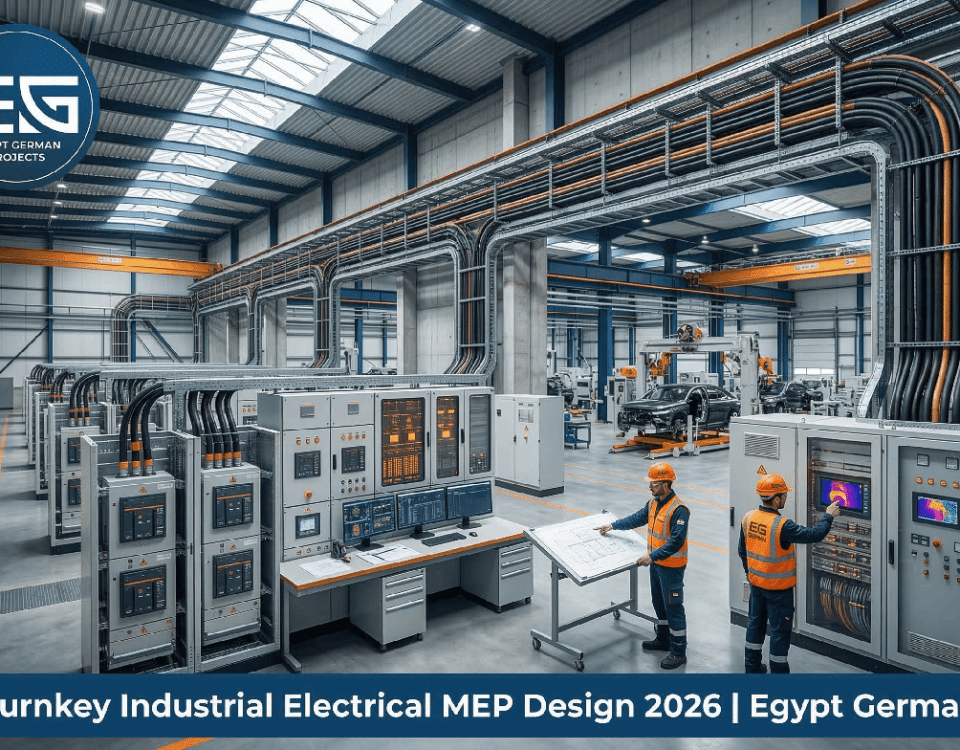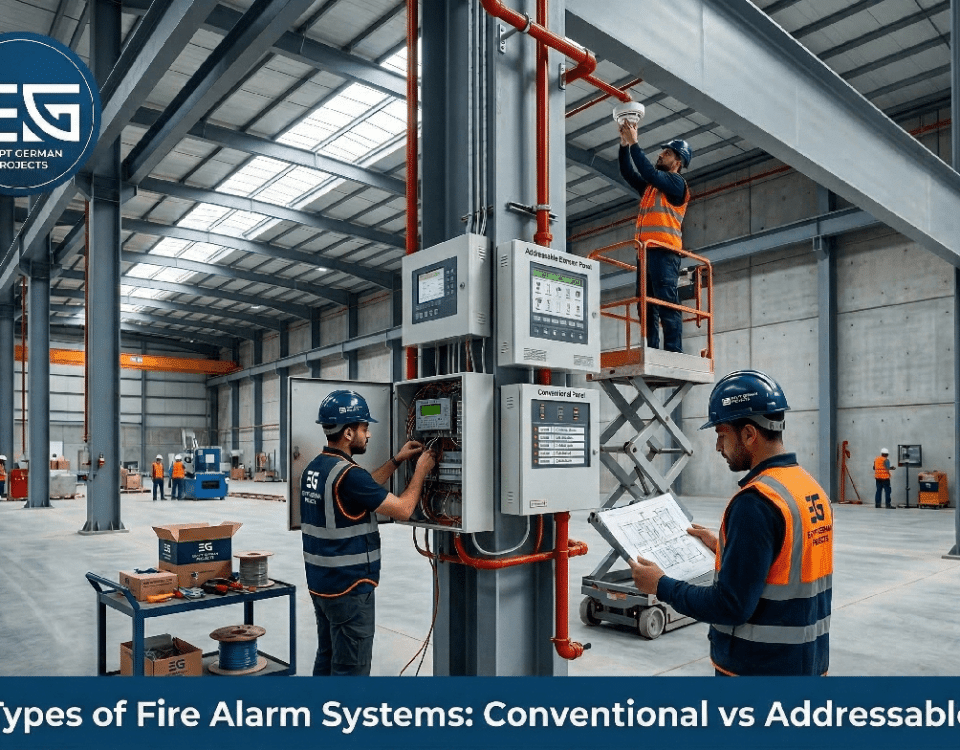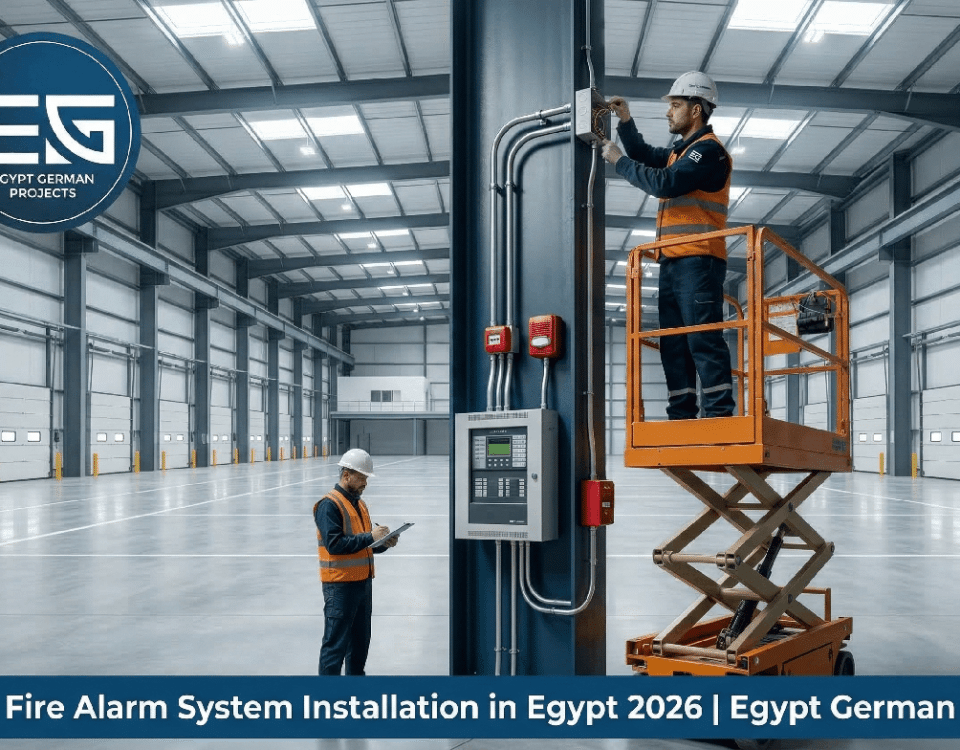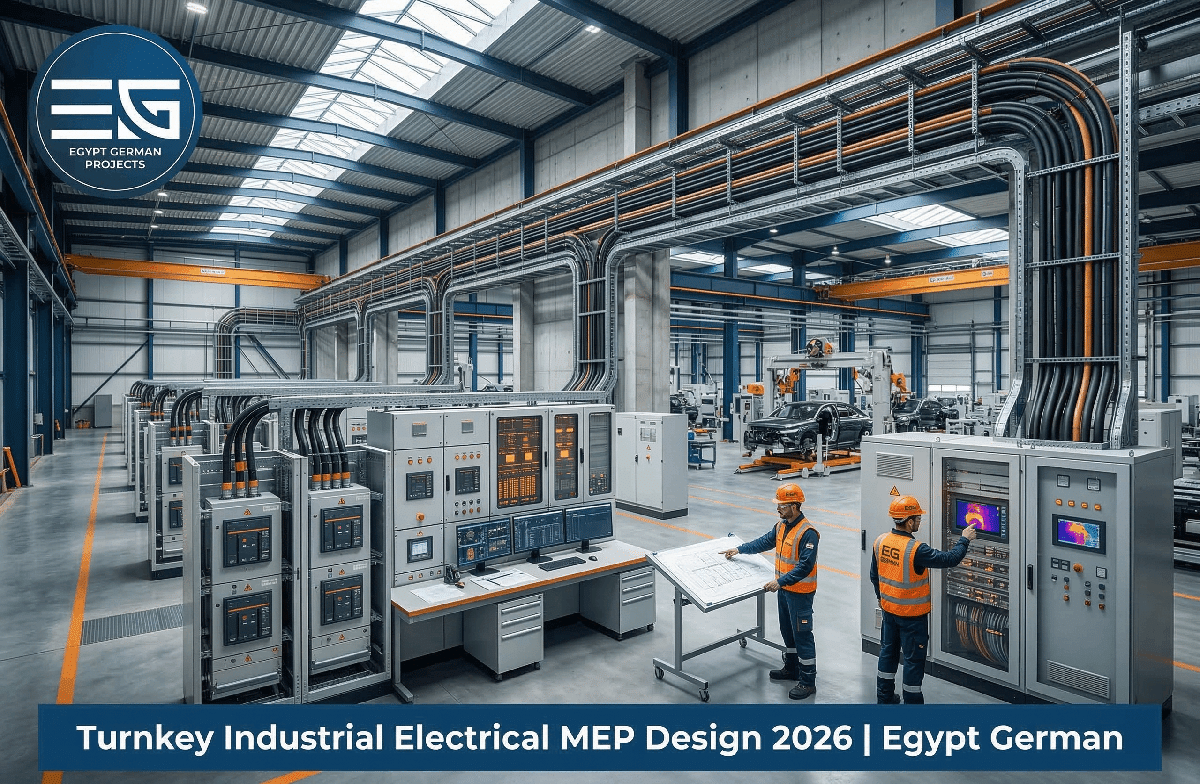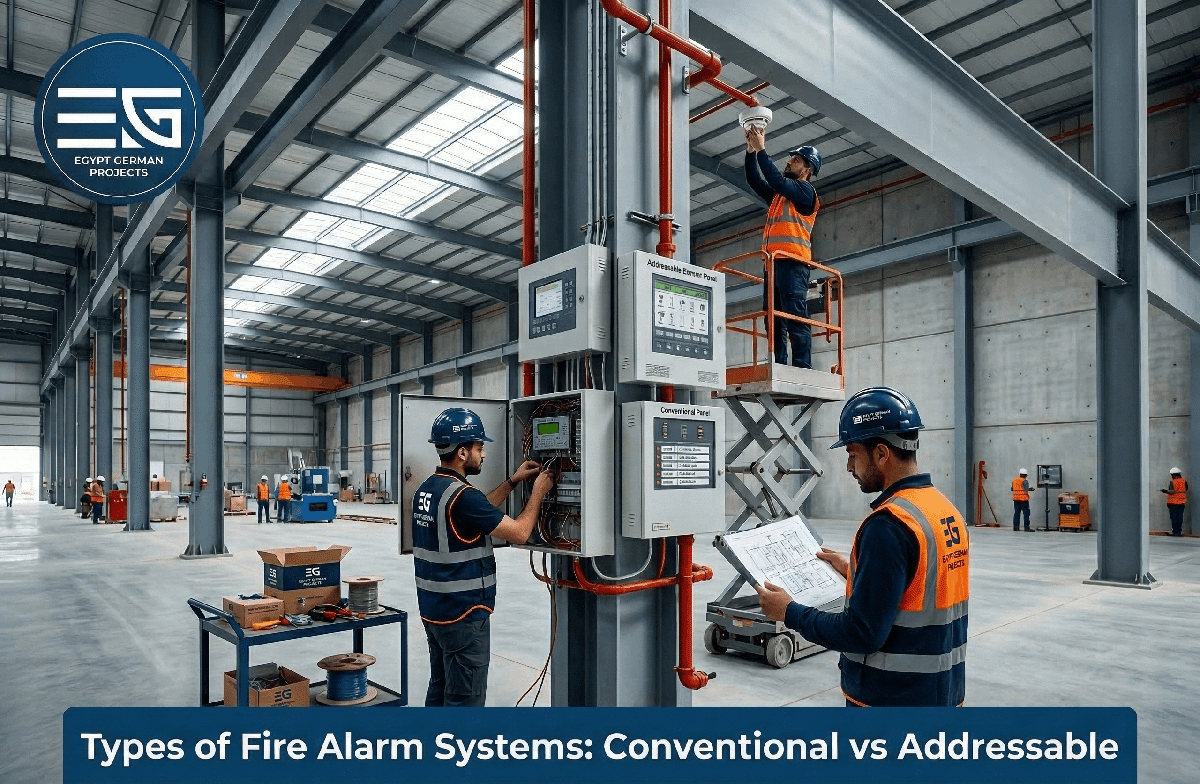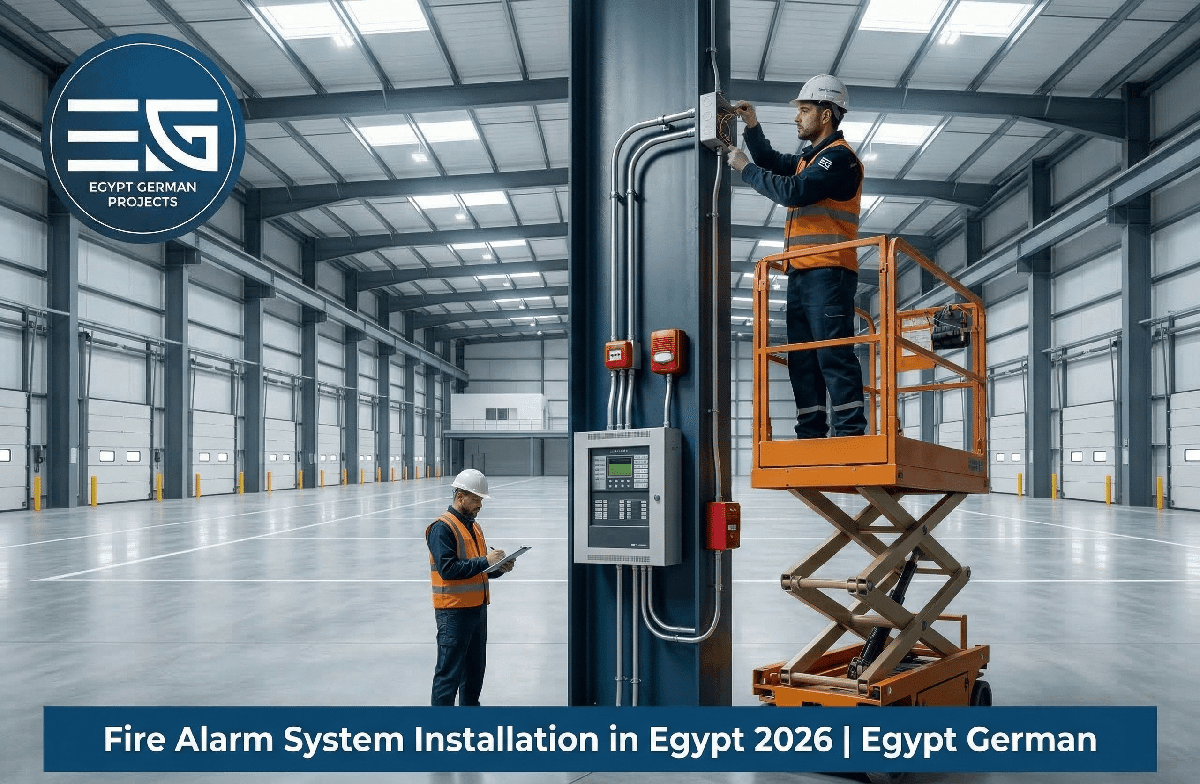

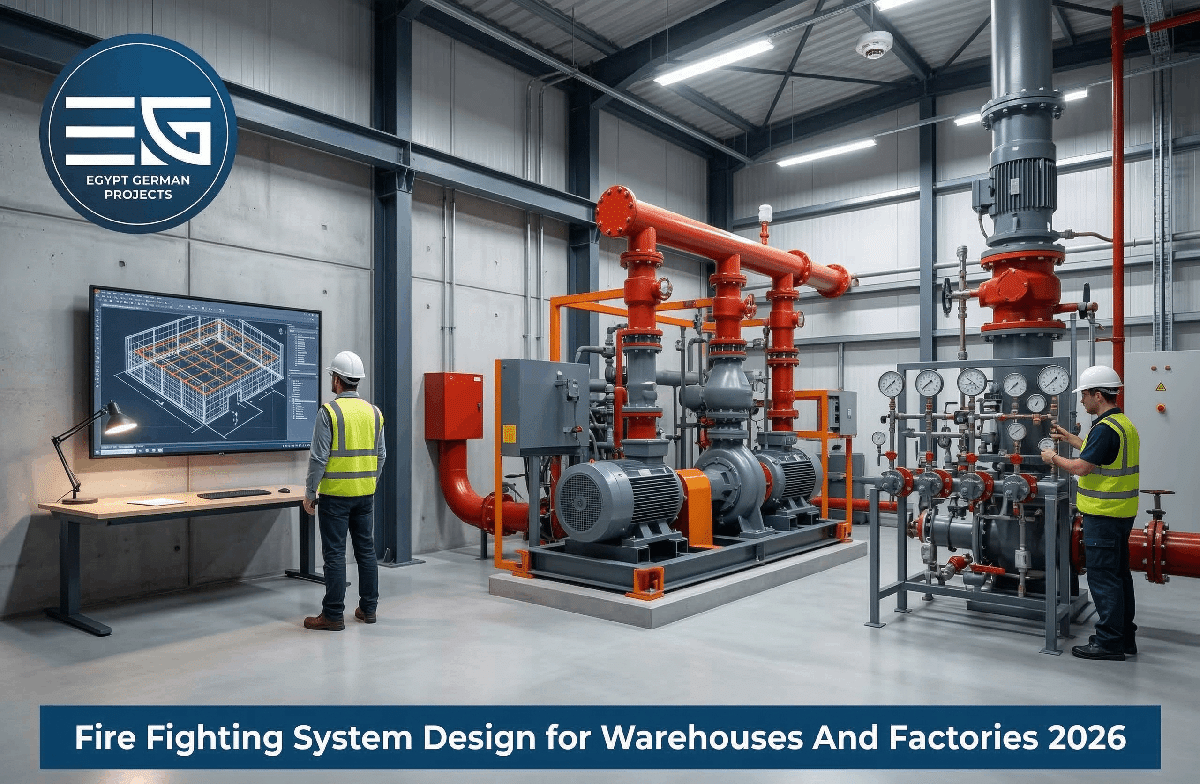
Fire risks threaten industrial buildings, factories, and warehouses. A single accident can halt production, destroy equipment, and risk lives. Every facility requires a reliable fire fighting system to detect and extinguish fires instantly.
Egypt German provides advanced fire fighting system design and installation as part of our turnkey engineering solutions. With over 15 years of experience, our engineers design systems that:
What is a Fire Fighting System?
A fire fighting system is a set of tools that protects your building. These systems work automatically or manually to find, control, and put out fires before they spread.
These tools stop fires early to reduce damage to your machines, buildings, and stored goods.
A typical fire system includes:
- Detectors: Sensors that “see” or “smell” smoke and heat.
- Suppression Tools: Equipment that stops the fire.
- Water or Gas Systems: Sprinklers or gas tanks to extinguish flames.
- Control Panels: The “brain” of the system that sets off alarms.
- Pumps and Tanks: The water storage and power needed to fight the fire.
Industrial facilities usually require more advanced systems than residential buildings because factories and warehouses contain large spaces, flammable materials, and valuable equipment.
Why Fire Fighting Systems Are Critical for Factories and Warehouses
Industrial buildings face higher fire risks compared to other facilities. This is because of:
- Electrical machinery
- Fuel and chemical storage
- Large quantities of goods
- Continuous operations
A properly designed warehouse fire fighting system can help:
- Detect fire quickly
- Stop fire from spreading
- Protect workers and equipment
- Reduce downtime and financial losses
- Meet government and international safety regulations
For many industries, installing a certified fire fighting system is also a legal requirement.
Main Types of Fire Fighting Systems
Different buildings require different types of fire suppression systems. Engineers select the system based on the type of building, stored materials, and fire risks.
Water-Based Fire Fighting Systems
Water systems are the most common fire protection solution in industrial buildings.
They include:
- Sprinkler systems
- Fire hydrants
- Hose reel systems
- Fire pumps and tanks
These systems release water automatically when heat or smoke is detected.
Water systems are ideal for:
- Warehouses
- Manufacturing facilities
- Commercial buildings
They are effective because water quickly cools flames and prevents fire spread.
CO2 Fire Fighting System
A CO2 fire system uses carbon dioxide gas instead of water to put out fires. It works by removing the oxygen that a fire needs to burn, stopping the flames instantly.
Egypt German installs CO2 systems to protect:
- Electrical & Server Rooms: No water means no damage to sensitive electronics.
- Generator Rooms: Fast suppression for high-risk power areas.
- Industrial Machinery: Ideal for protecting expensive factory equipment.
Safety First: Since CO2 removes oxygen, Egypt German designs every system with advanced alarms and delay timers. This ensures your workers and maintenance teams have ample time to evacuate before discharge.
Foam Fire Fighting Systems
Foam systems are designed for fires involving flammable liquids, such as fuel or chemicals.
The foam creates a blanket over the burning surface, which:
- Blocks oxygen
- Prevents vapor release
- Stops fire spread
These systems are widely used in:
- Oil storage facilities
- Chemical factories
- Fuel depots
They are essential for industries dealing with highly combustible materials.
Fire Fighting System Design for Industrial Buildings
Proper fire system design is the most important step in fire protection. A poorly designed system may fail during an emergency.
Professional engineering companies like Egypt German follow a detailed design process.
Risk Assessment
Engineers first study the building to identify:
- Fire hazards
- Building layout
- Storage materials
- Electrical and mechanical systems
This helps determine the best protection strategy.
System Planning and Engineering
The next step is designing the system components, including:
- Pump rooms
- Water storage tanks
- Pipe networks
- Sprinkler coverage
- Gas suppression zones
The goal is to ensure complete fire coverage across the facility.
Compliance with Global Standards
Fire systems must follow international safety standards such as:
- NFPA regulations
- Civil defense requirements
- Industrial safety codes
At Egypt German, we design systems that comply with global engineering standards and regional regulations.
Warehouse Fire Fighting System Requirements
Warehouses require special fire protection because they contain large storage areas and stacked materials.
Key design considerations include:
- High ceiling sprinkler systems
- Fire hydrant networks
- Smoke detection systems
- Emergency control panels
Large warehouses may also require zoned fire protection systems to isolate fires quickly.
Proper system design helps protect inventory and ensures business continuity.
Integrated Safety Solutions with Egypt German
At Egypt German, fire safety is part of our complete construction and turnkey engineering solutions.
Our team provides:
- Fire fighting system design
- Industrial fire protection installation
- Warehouse fire safety systems
- Integration with MEP construction , HVAC and ventilation systems
- Compliance with global safety standards
We focus on protecting factories, warehouses, and large industrial facilities across Egypt and the MENA region.
Our goal is to deliver safe, efficient, and reliable engineering solutions that protect people, assets, and operations.
FAQ About Fire Fighting System
Why are fire protection systems important for warehouses?
Warehouses store large quantities of goods, which increases fire risk. A warehouse fire fighting system helps detect fires quickly and prevent large-scale damage.
What is a CO2 system used for?
A CO2 fire fighting system is mainly used in electrical rooms, generator rooms, and data centers where water-based systems could damage equipment.
What are the main components of a fire protection system?
The main components include fire pumps, water tanks, sprinkler systems, fire hydrants, control panels, and detection devices.
How are fire protection systems designed?
Engineers start with a risk assessment, then design the pipe network, pumps, suppression systems, and detection devices according to safety standards.
What is the difference between sprinkler and hydrant systems?
Sprinklers activate automatically when heat is detected, while hydrant systems are used manually by firefighters.
Which type of fire protection is best for factories?
Factories usually use a combination of sprinkler systems, hydrants, and sometimes gas suppression systems depending on the fire risk.